Statues from Timor
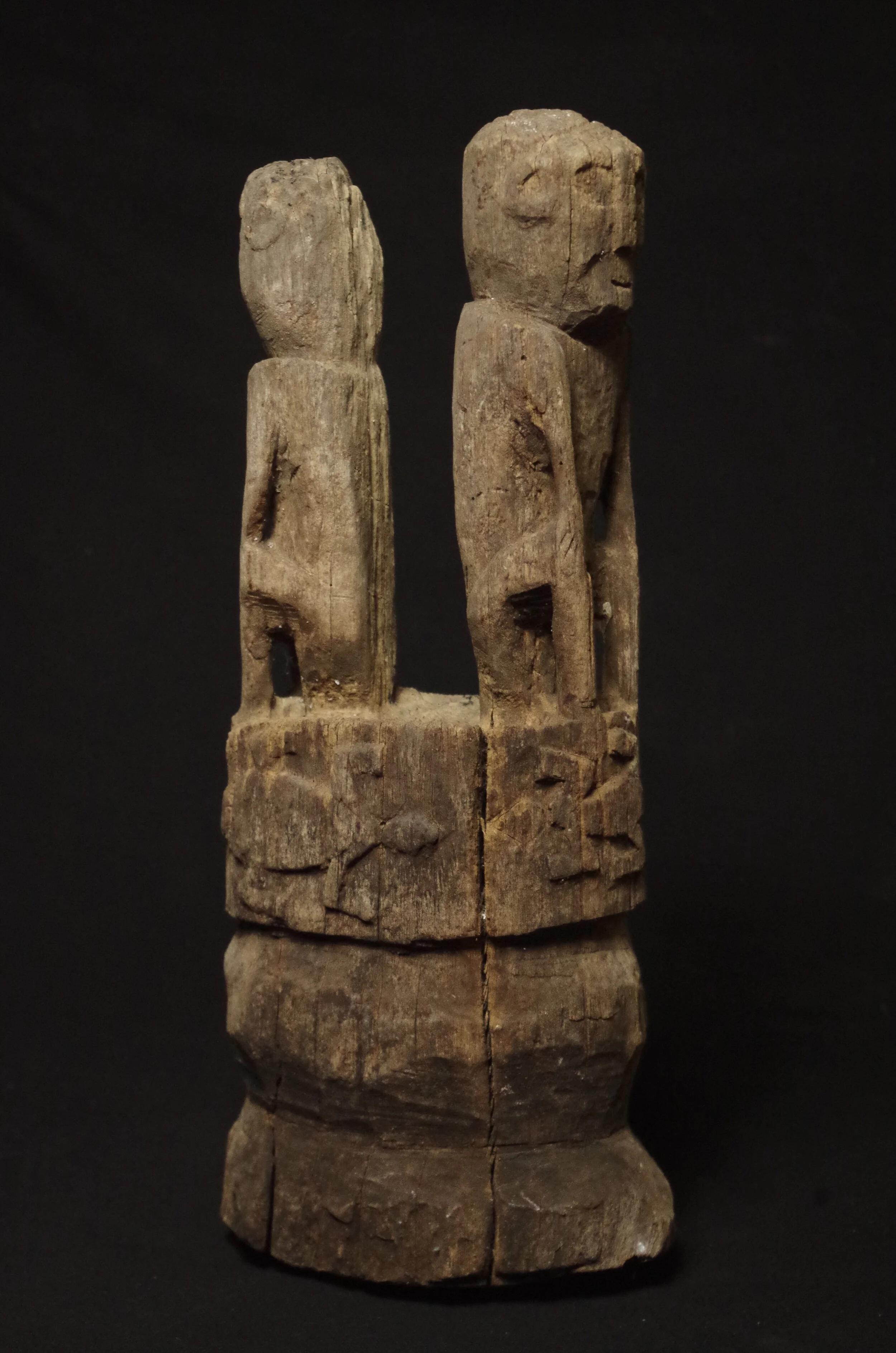
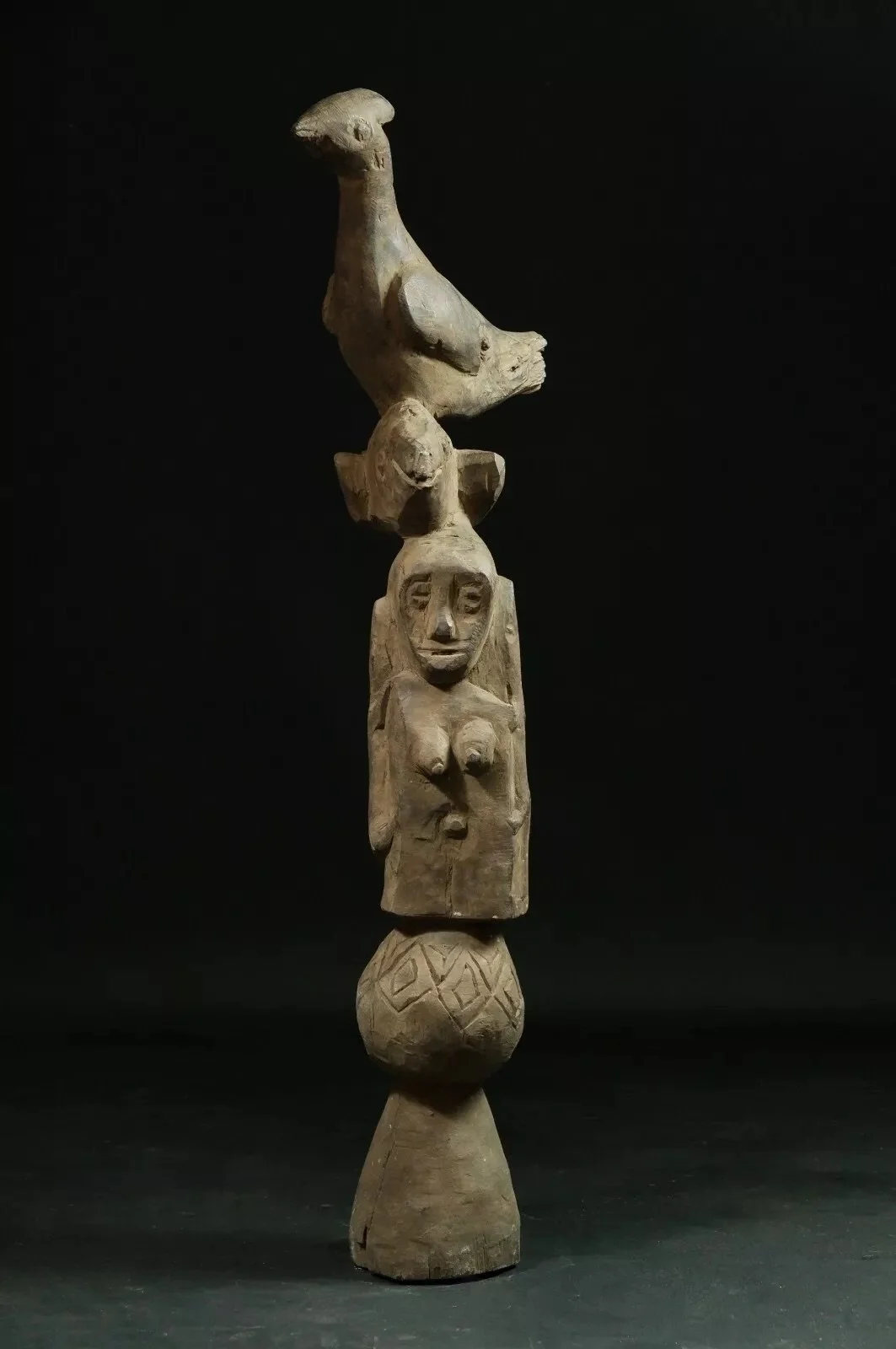
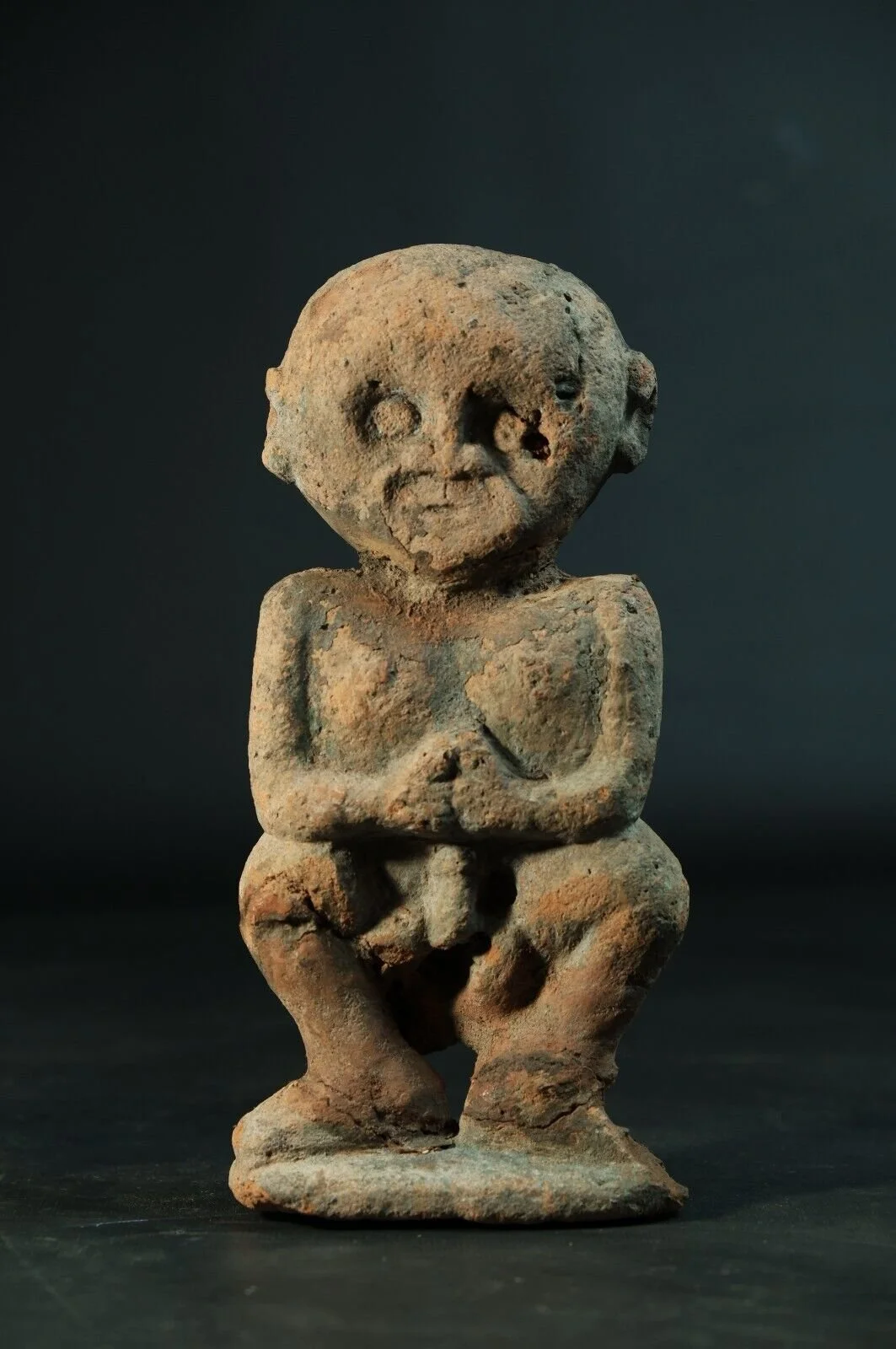
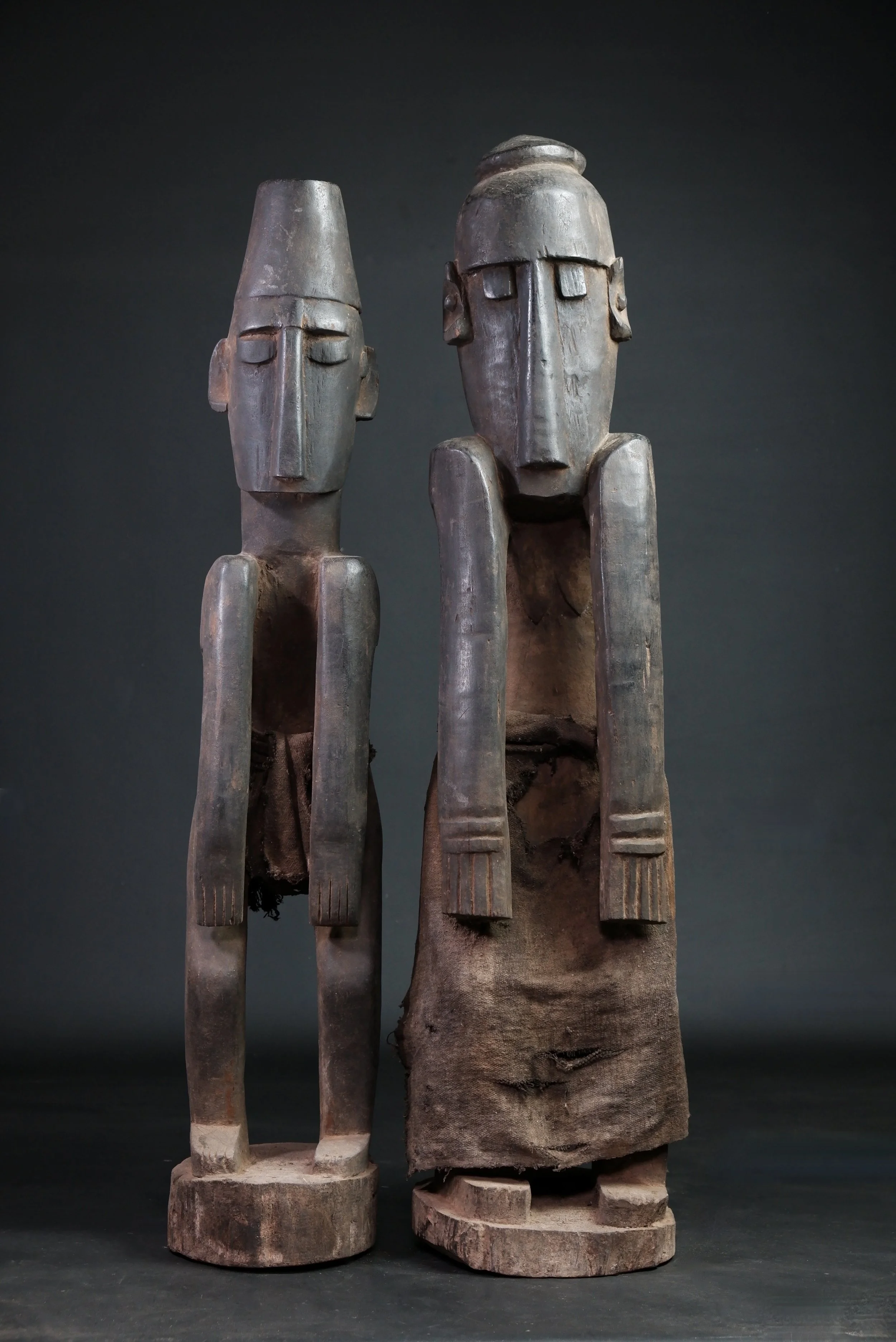
Timorese statuary varies considerably in scale, from small figures close to amulets to pieces of almost human size, and in material: wood above all, but also stone, buffalo horn and bone. Anthropomorphic figures predominate, with rarer fully zoomorphic carvings, mainly crocodiles and birds. The boundary between statue and post is not sharp: what defines these objects is their ritual function rather than their form.
Faces are stylised rather than naturalistic. Postures vary: standing with the arms along the sides, or seated with the knees raised and the arms resting on them. Horns, birds, crocodiles and geometric motifs are sometimes added to the head or body. The dark patina found on many pieces comes from the smoke of the houses in which they were kept.
Documented uses differ. Roof carvings were described to me as a form of protection for the dwelling. Carved posts from Atoni areas plausibly relate to funerary or commemorative practice. At outdoor altars, figures serve as the focus of ancestral observance; in three cases I was able to document in Tetun areas, such figures are still in ritual use today.
A note on terminology: the trade uses aitos for almost any carved vertical figure from Timor. In Tetun usage the term defines an altar post by its ritual function, not by its form, and it is not used in every area. I use it only where it is actually attested.