artifacts from nias
Nias lies about 120 km off the west coast of Sumatra. Its societies were strongly stratified, organised around rank, feasting and descent, and are known for stone-built villages and for the great chiefs' houses, omo sebua, raised on massive hardwood pilings.
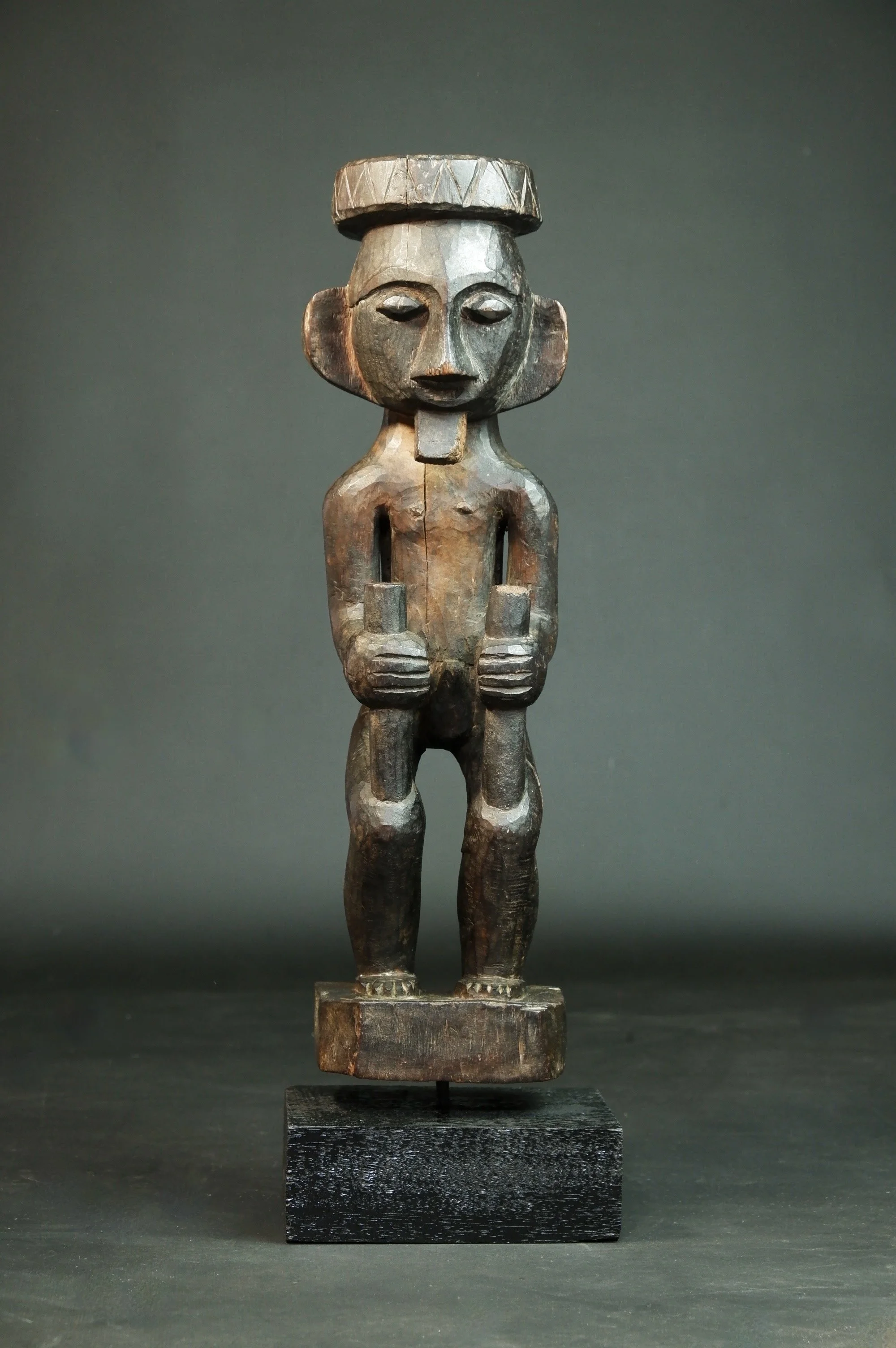
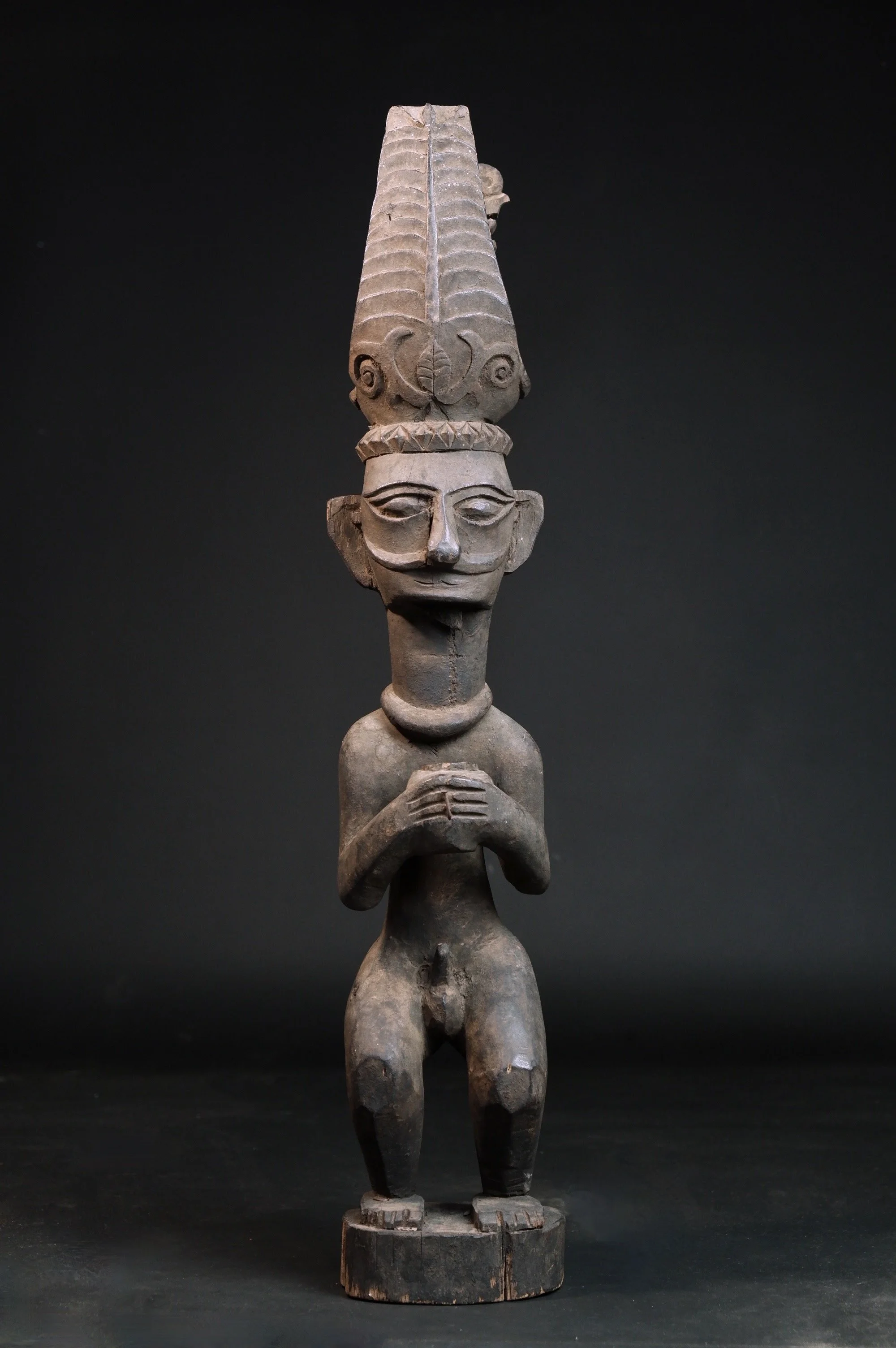
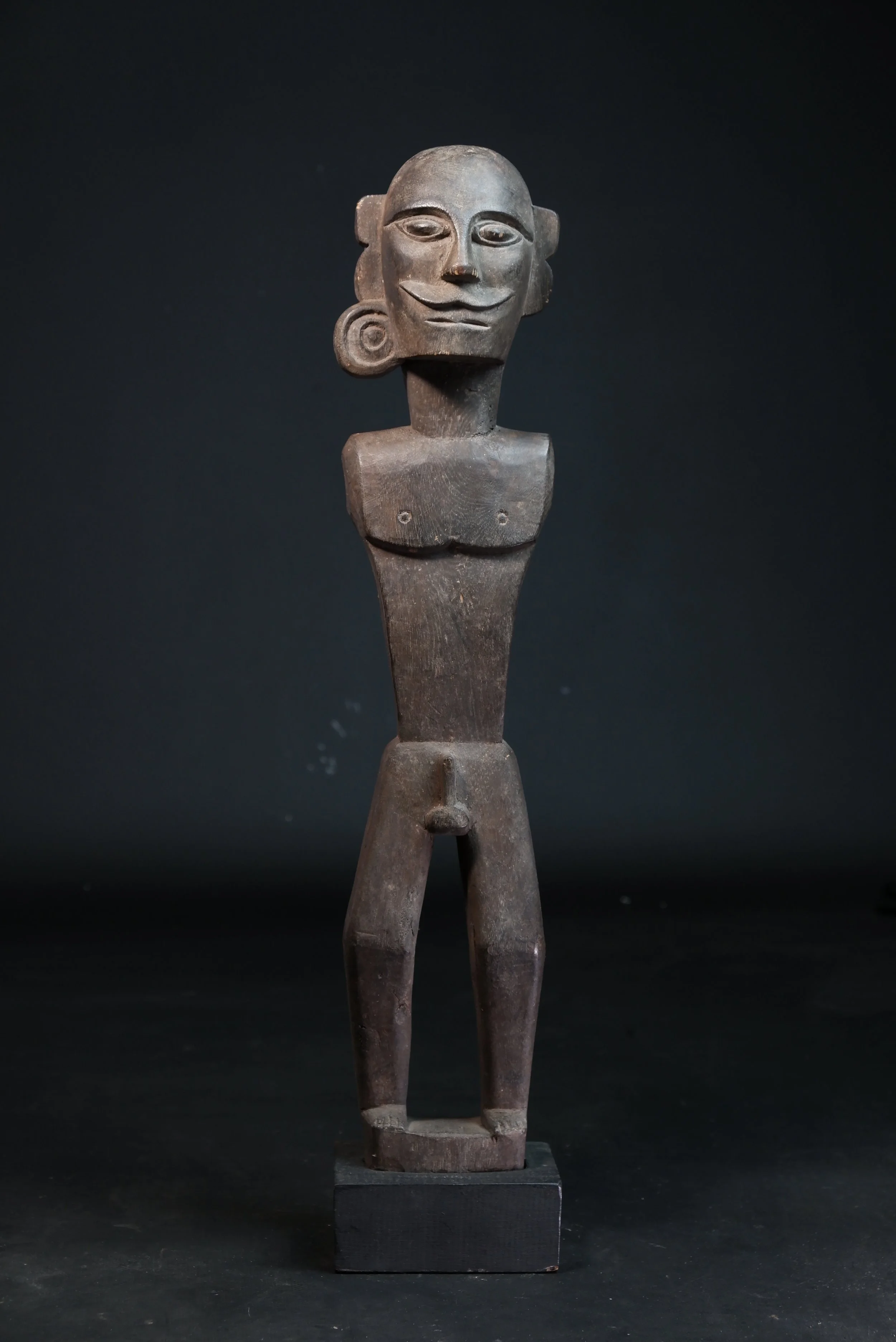
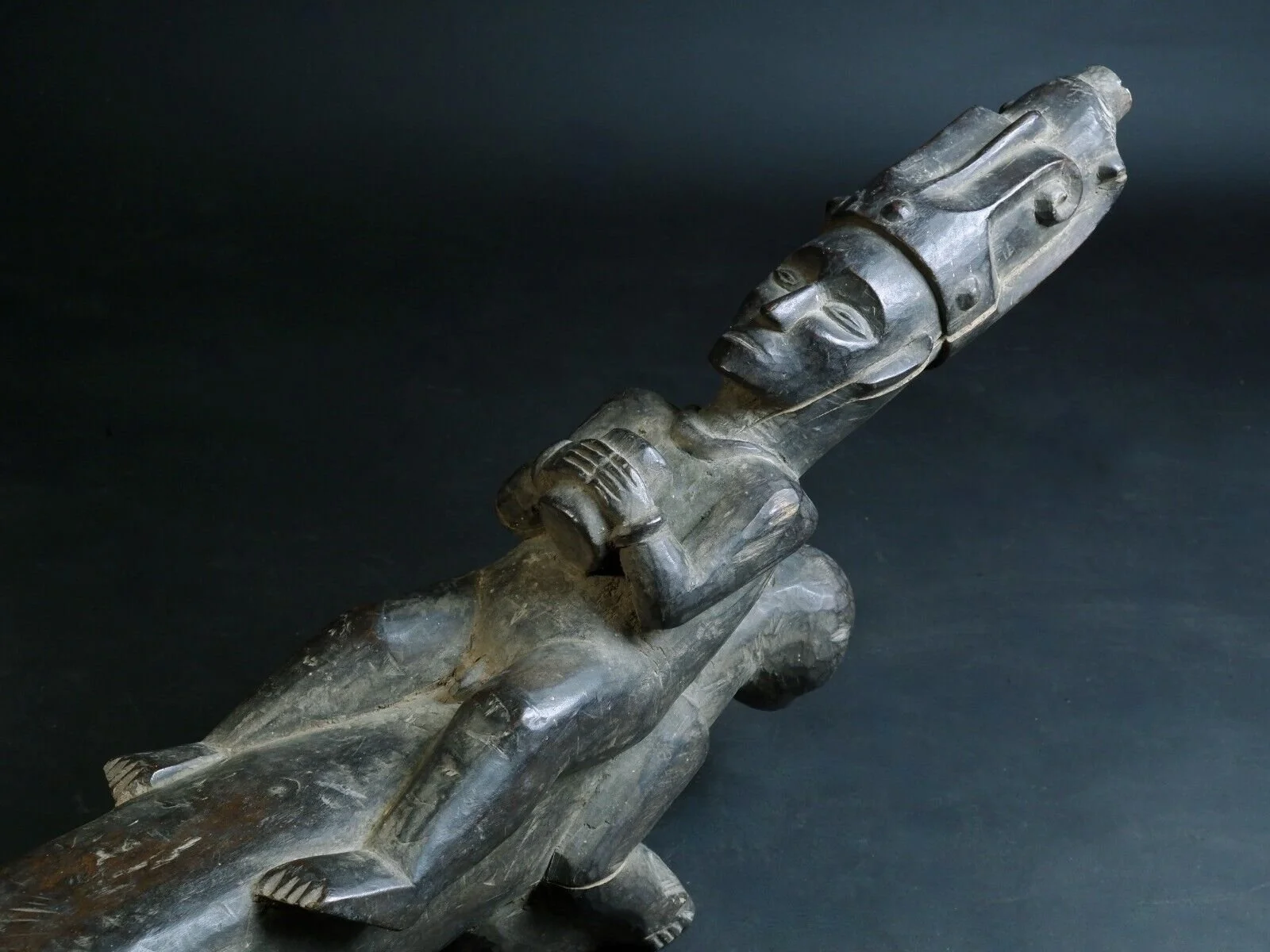
Wooden ancestor figures, adu, were central to domestic ritual. In central and southern Nias, an adu zatua was carved on the death of a parent and kept in the house as the seat of the ancestor's spirit; a single house could hold many of them, lashed together to display the lineage. The elaboration of the figure followed the rank of the person it represented. In the north, the corresponding images of chiefs and nobles are known as adu siraha salawa: seated figures, usually larger and more finely worked, wearing an elaborate crown and the gold ornaments of their status.
The two terms are often used interchangeably in the trade. They are not synonyms: they belong to different regions and different categories of person.