Random photos of our findings in situ (West Timor, Indonesia)


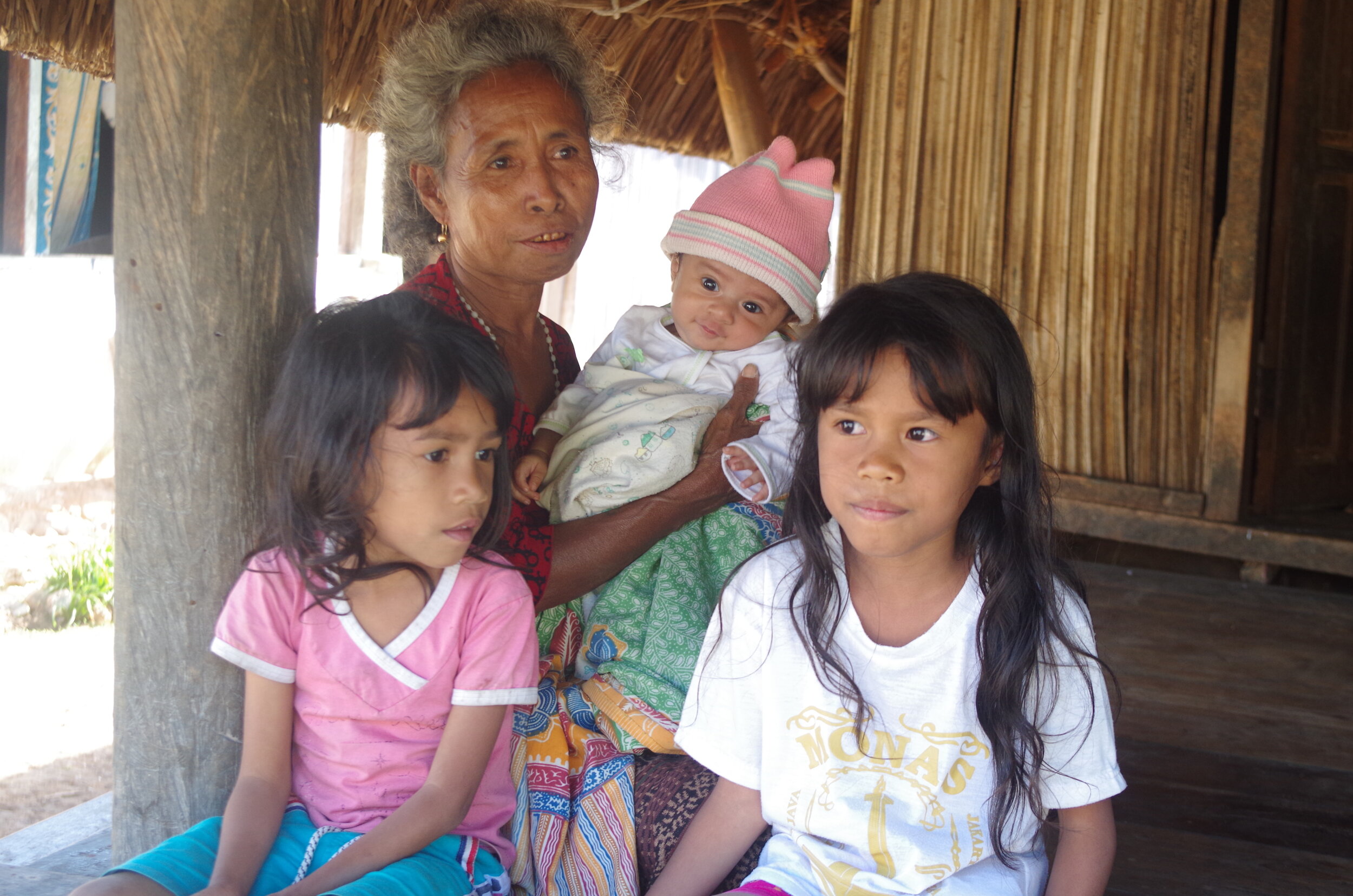


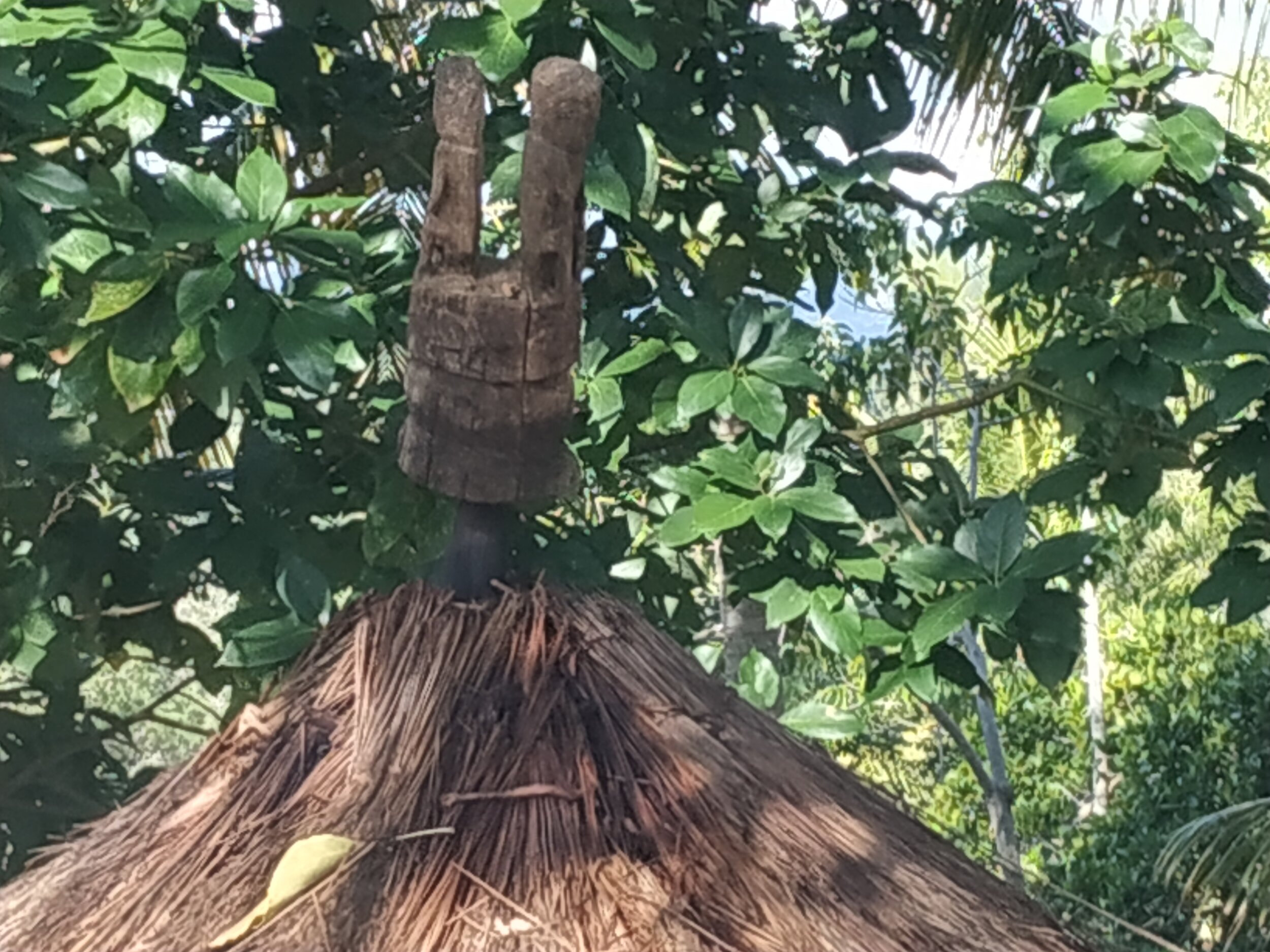


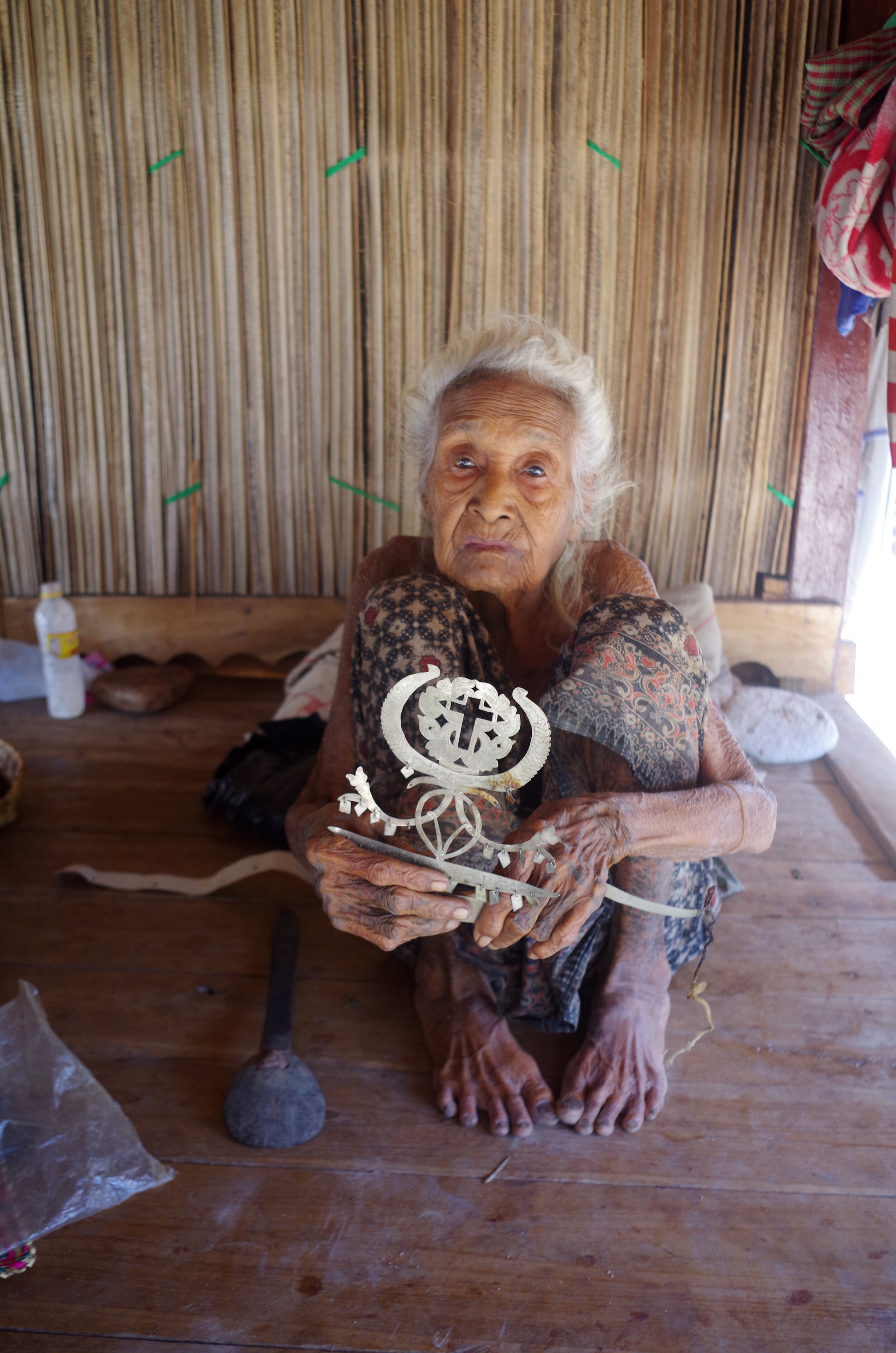

Random photos of our findings in situ (West Timor, Indonesia)
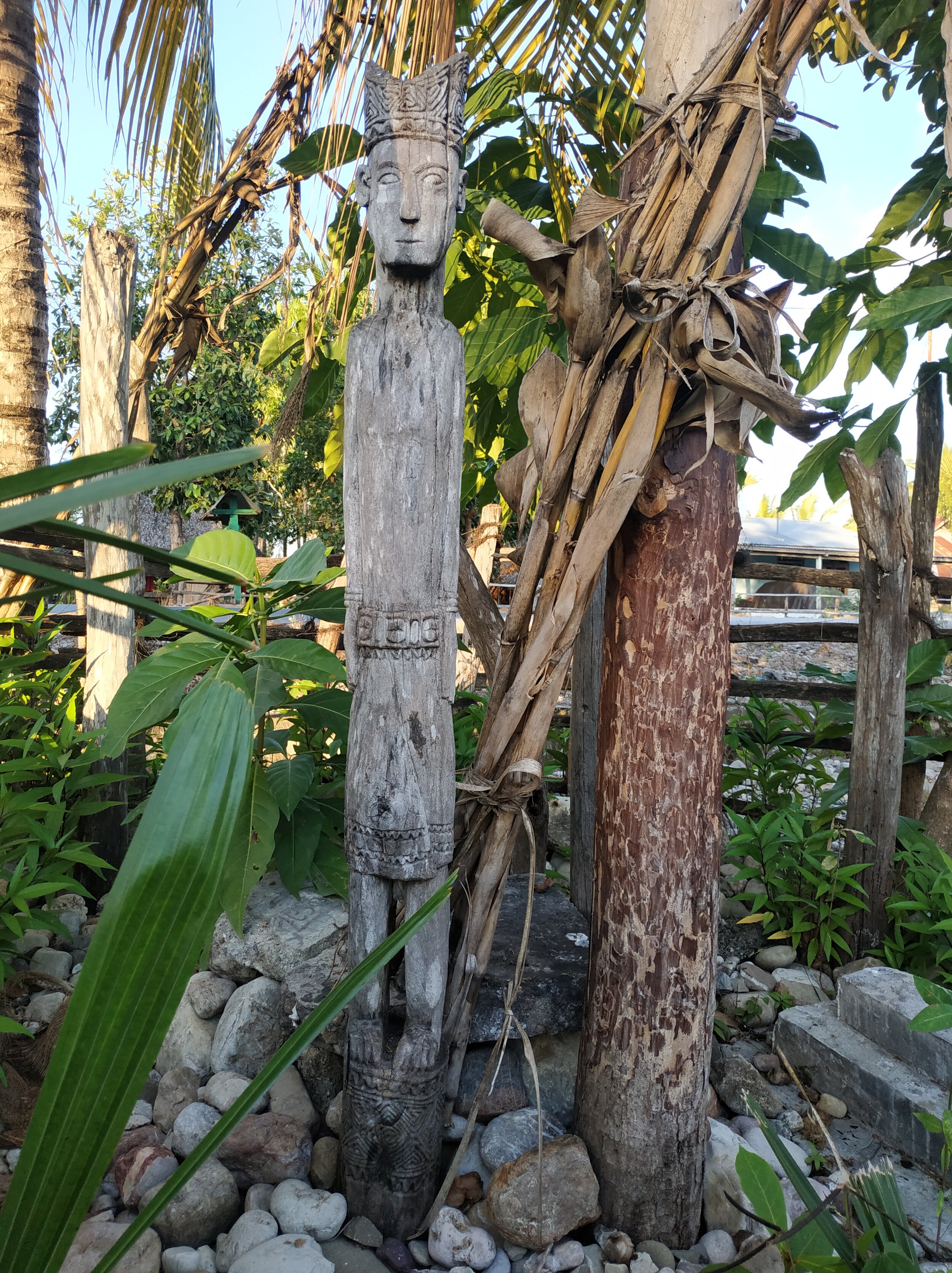
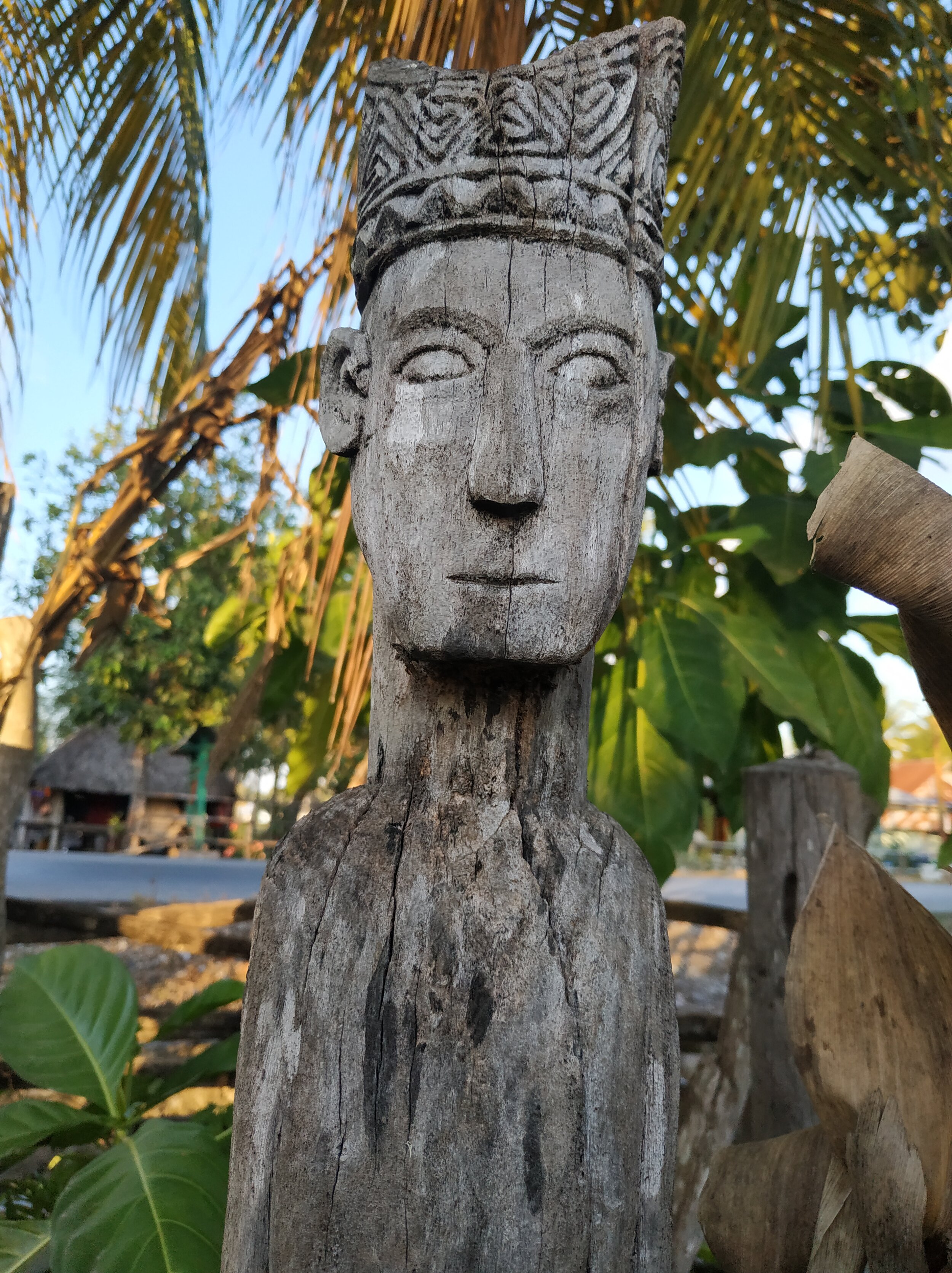
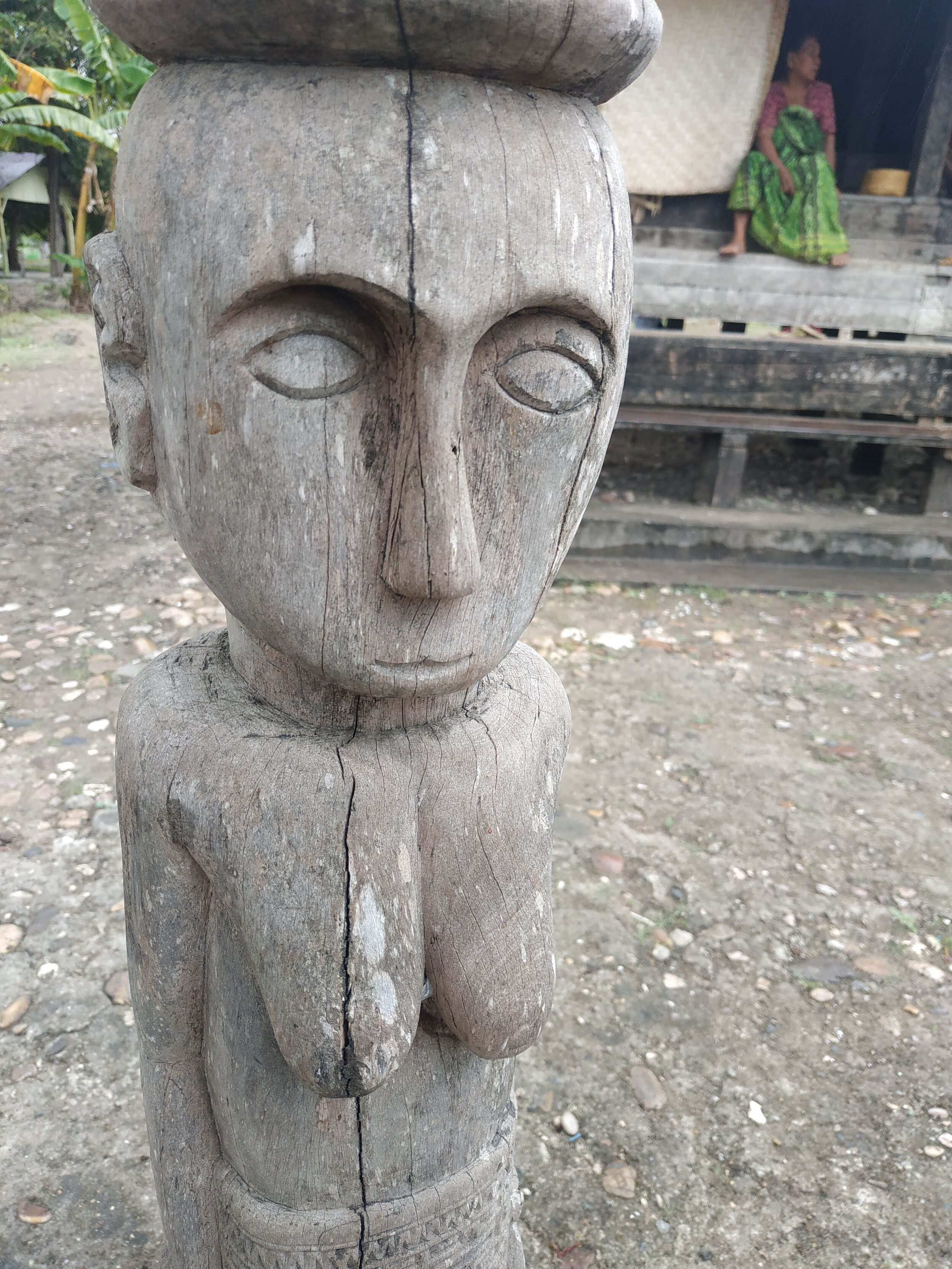
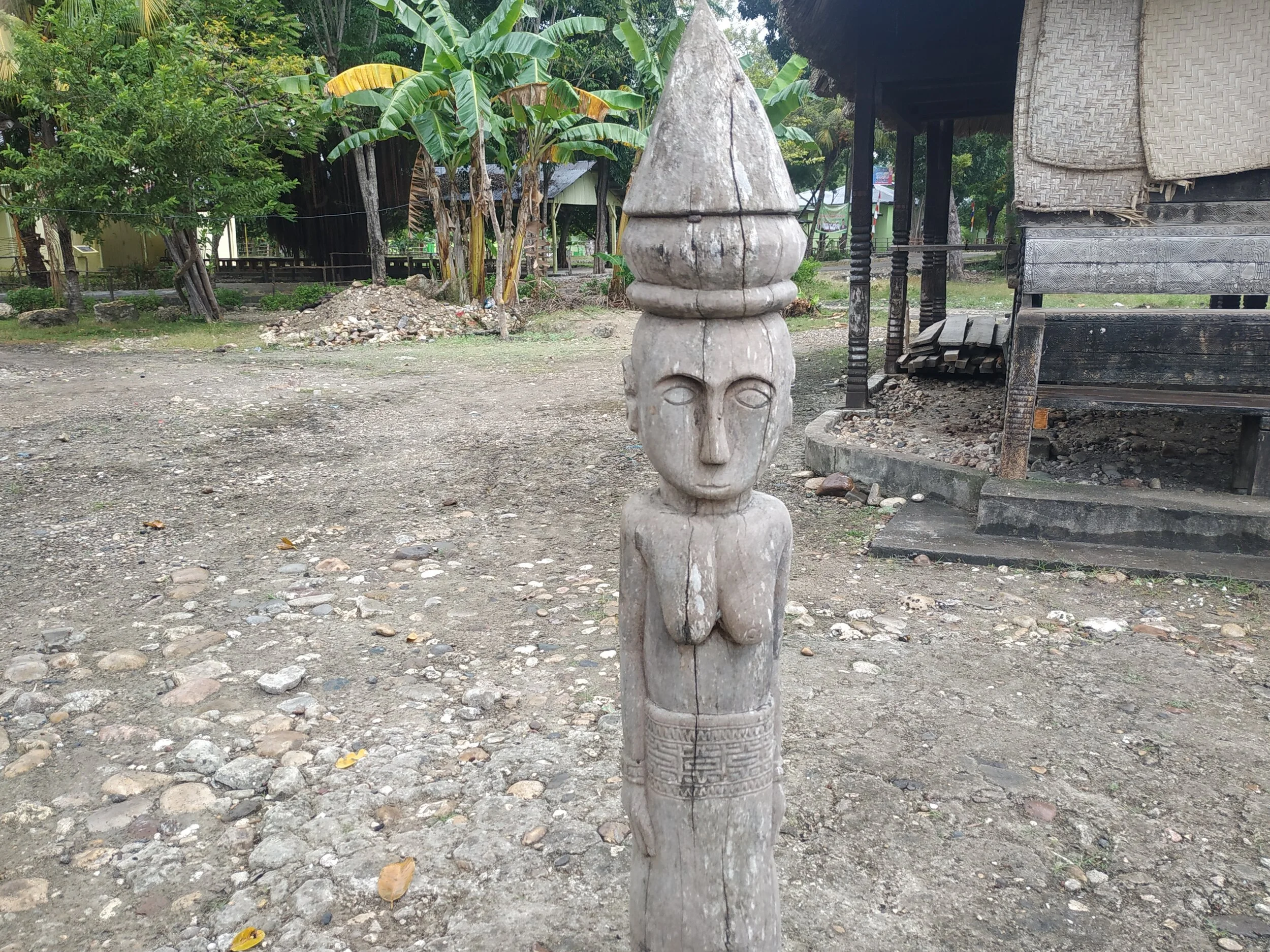
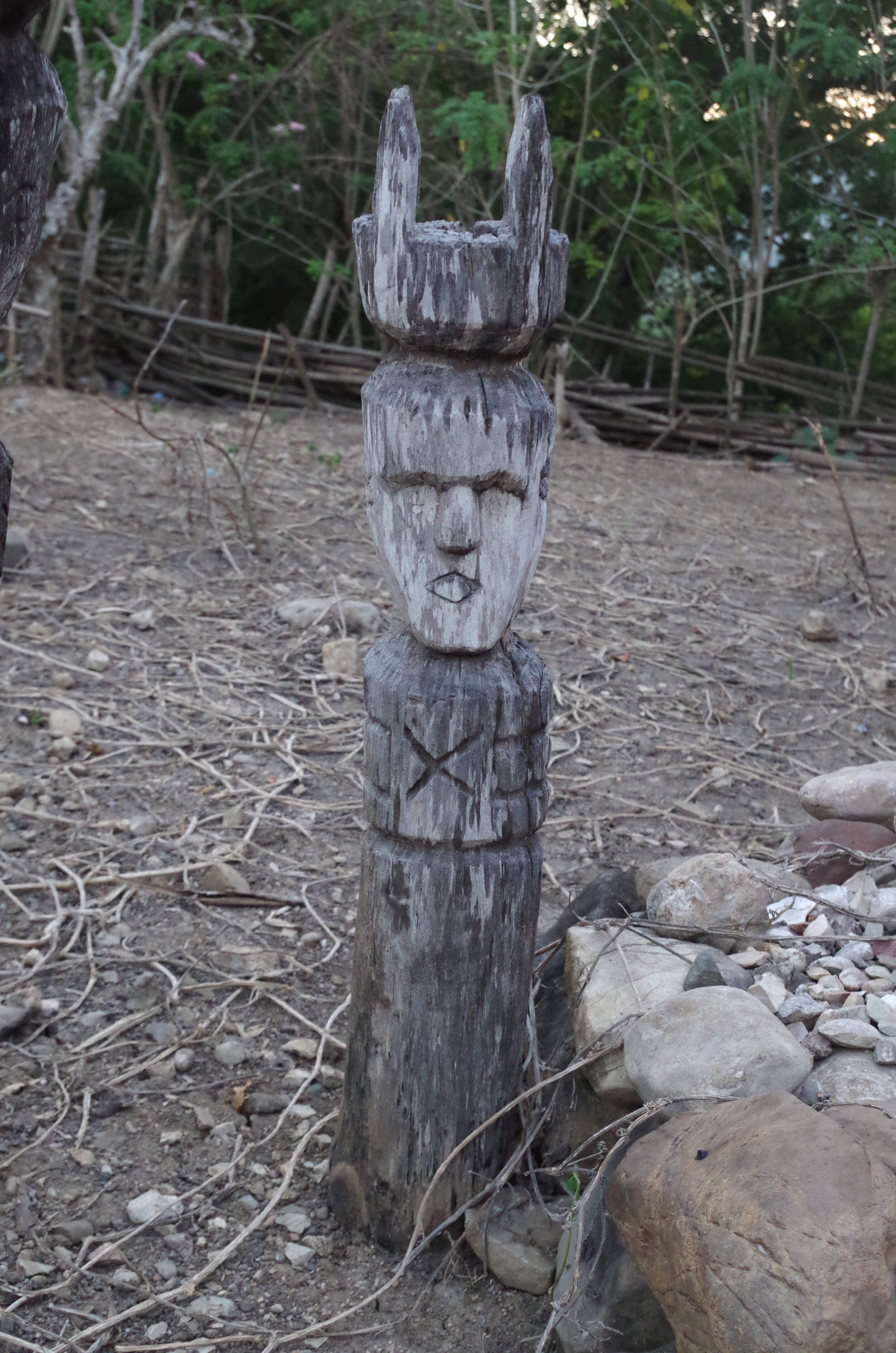
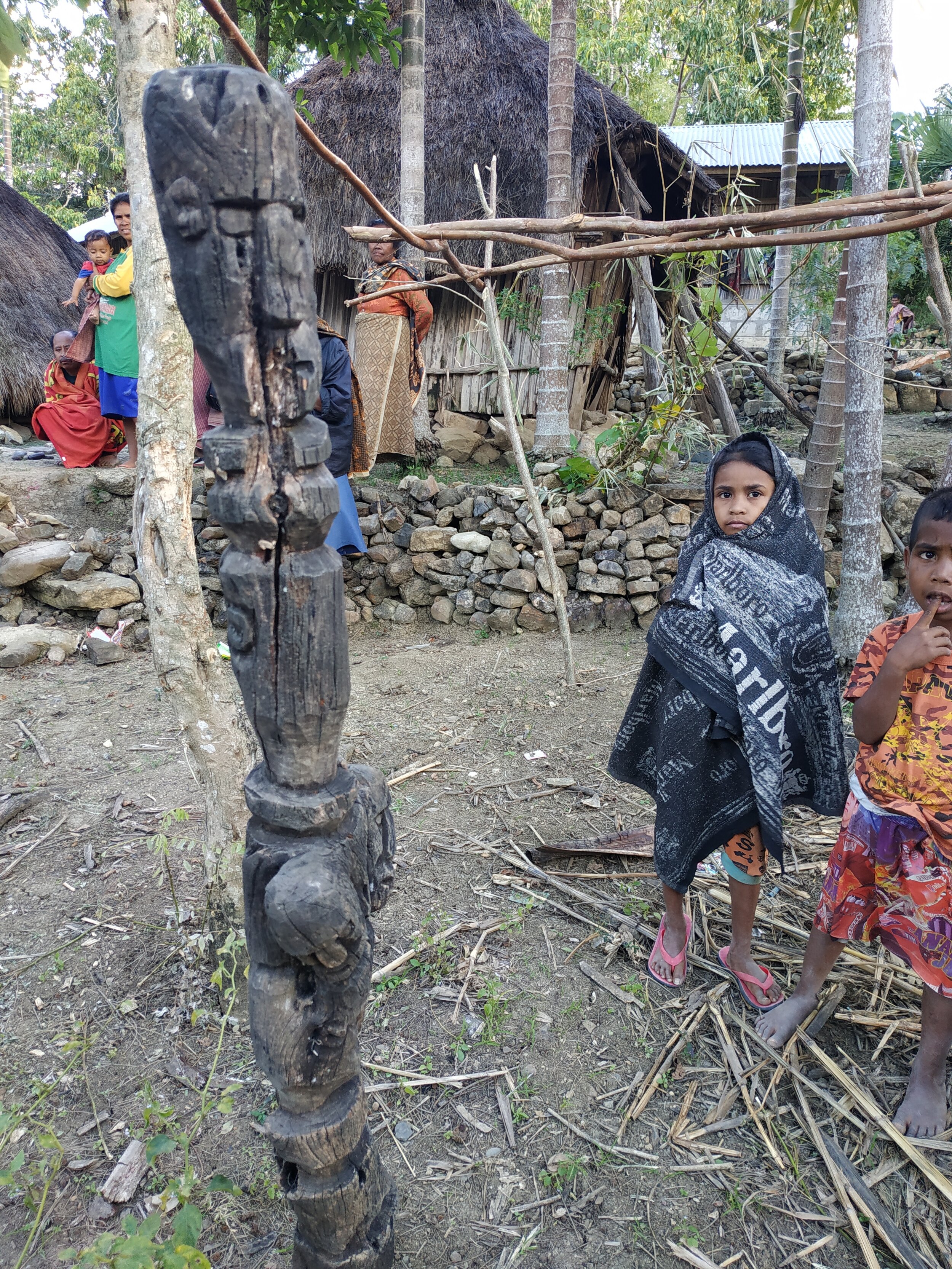
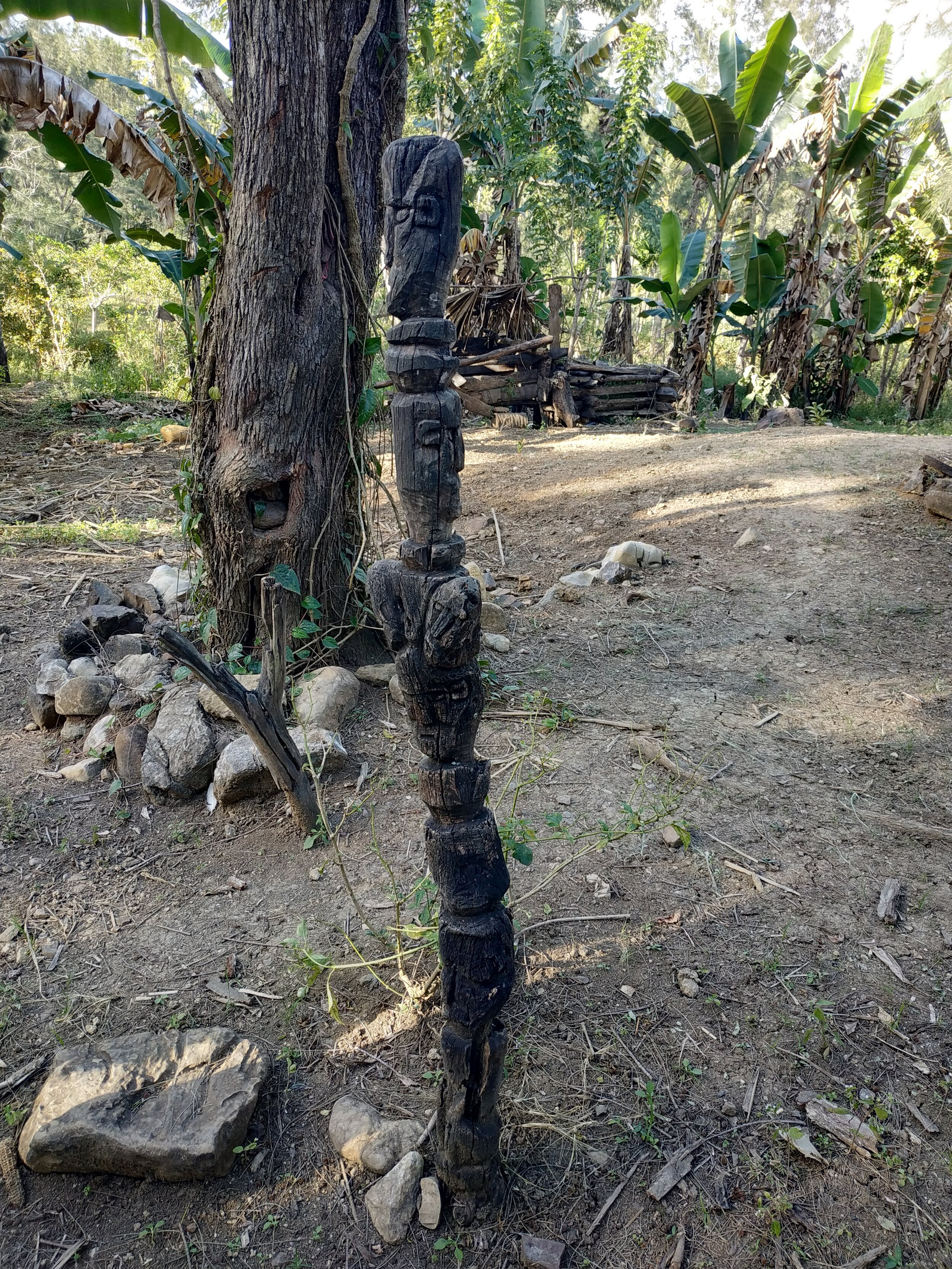
Ai toos set in an active altar: an ancestral figure carved with headdress and traditional dress, partly eroded by exposure. Tied to the post is the maize plant from the harvest ritual, bound while green and since dried.
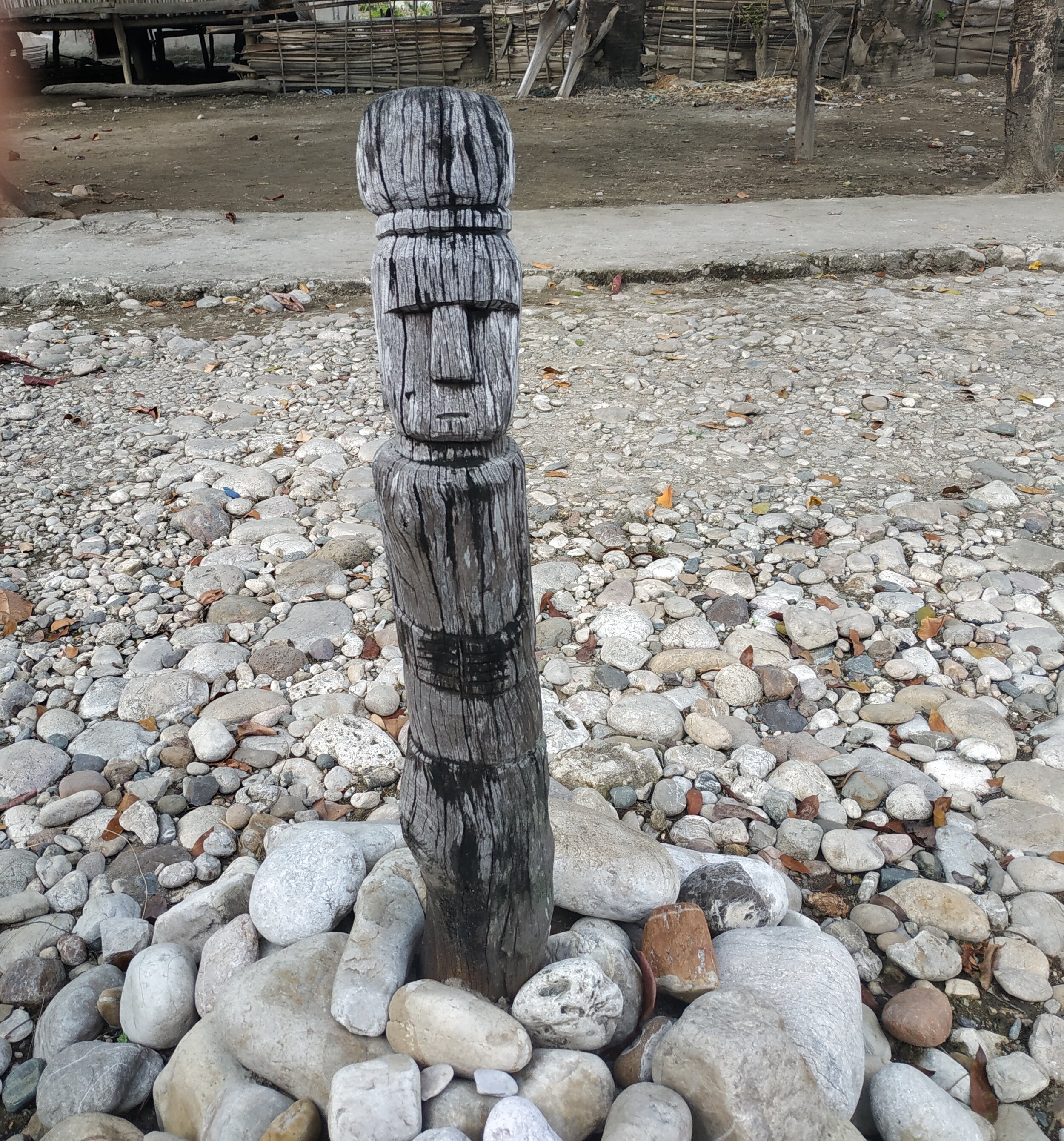
Ai toos with blood spots from the last ritual, West Timor , 2019
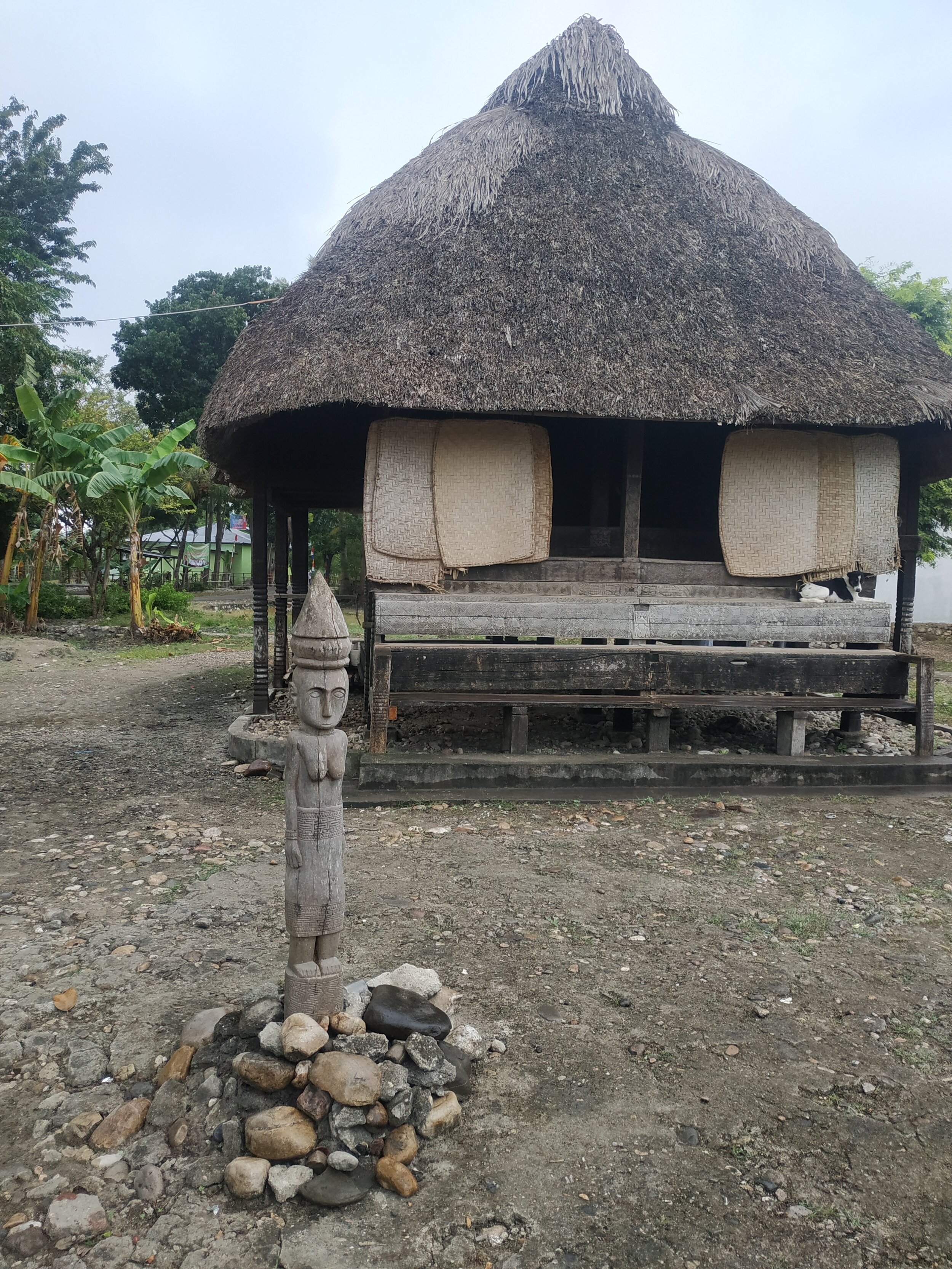
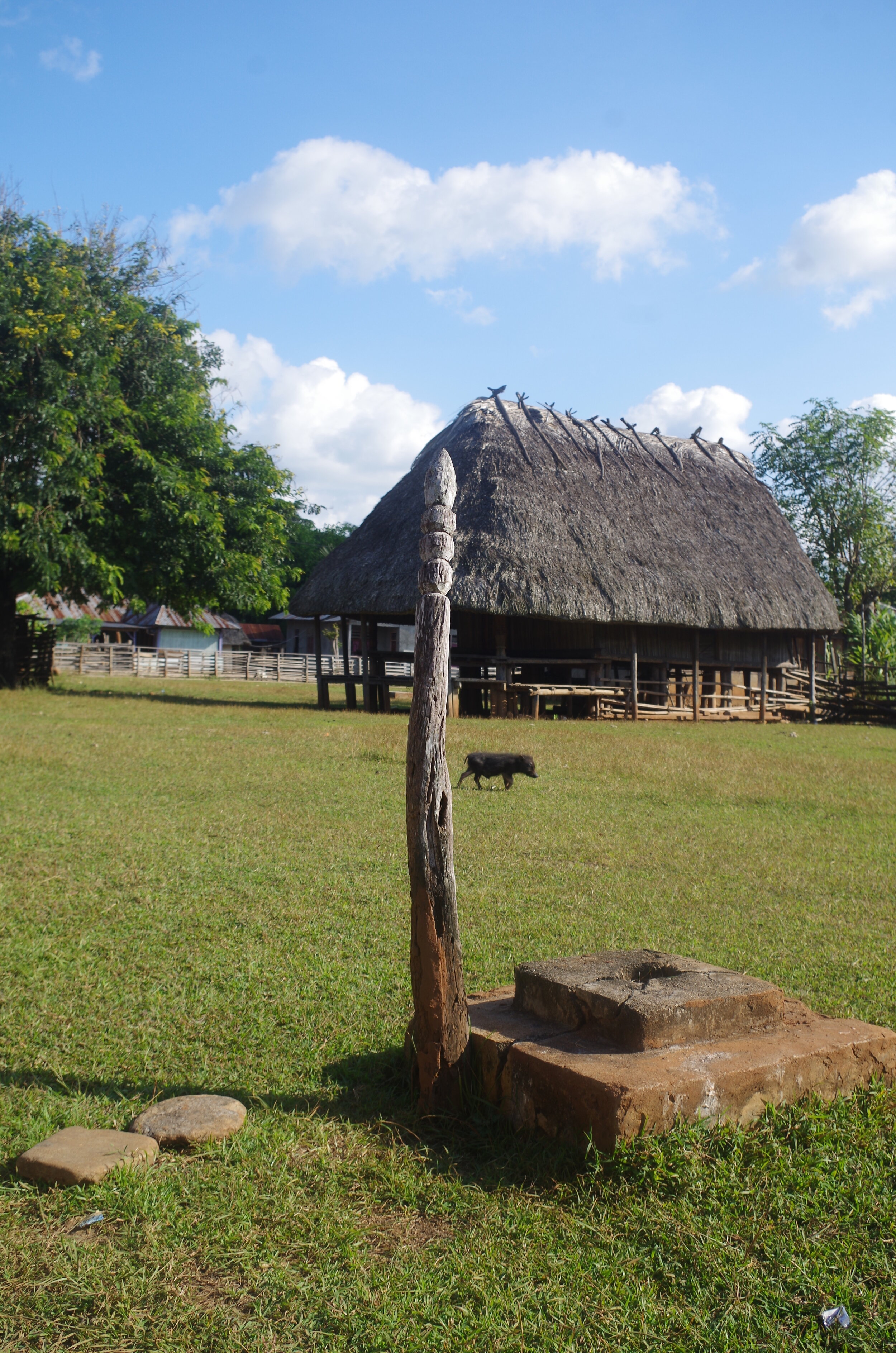
Ai toos in front of a traditional Tetun house
A glass at the base of the ai toos, used to gather blood during ritual sacrifices.
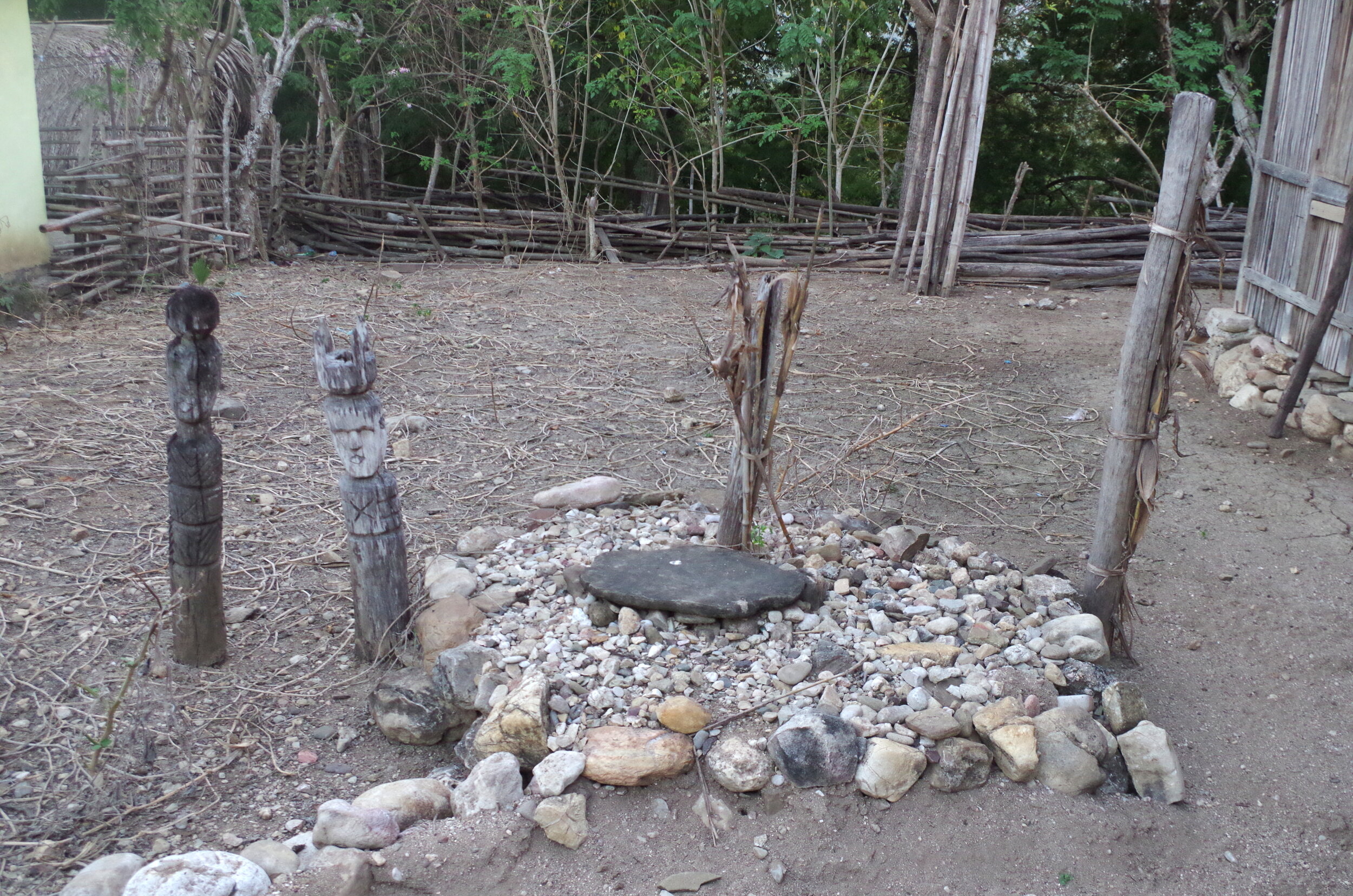
Tetun altar with two ai tos on the right side
A Tetun woman standing in the sacred space of her altar, her hand resting on an ai tos carved figure.
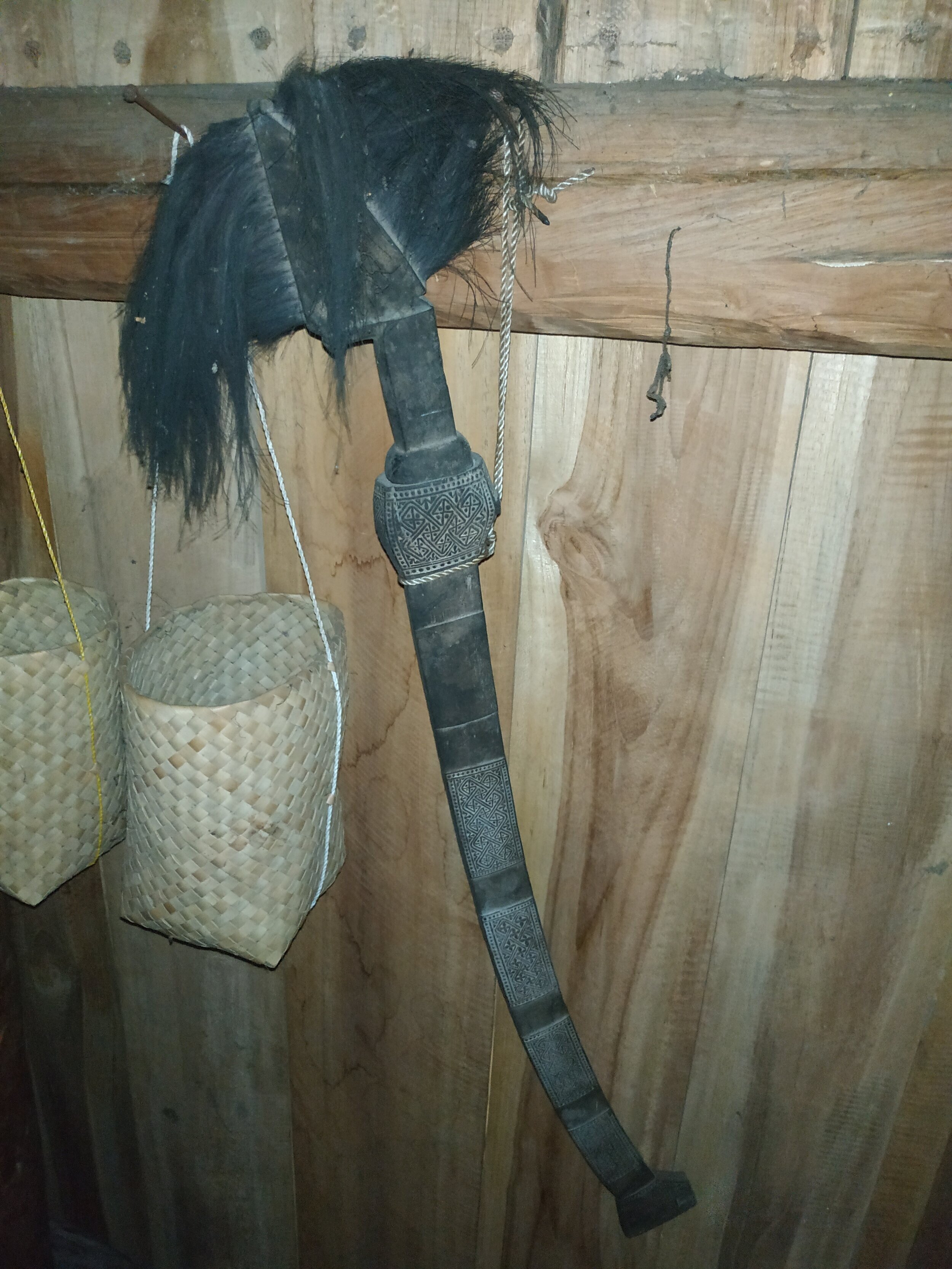
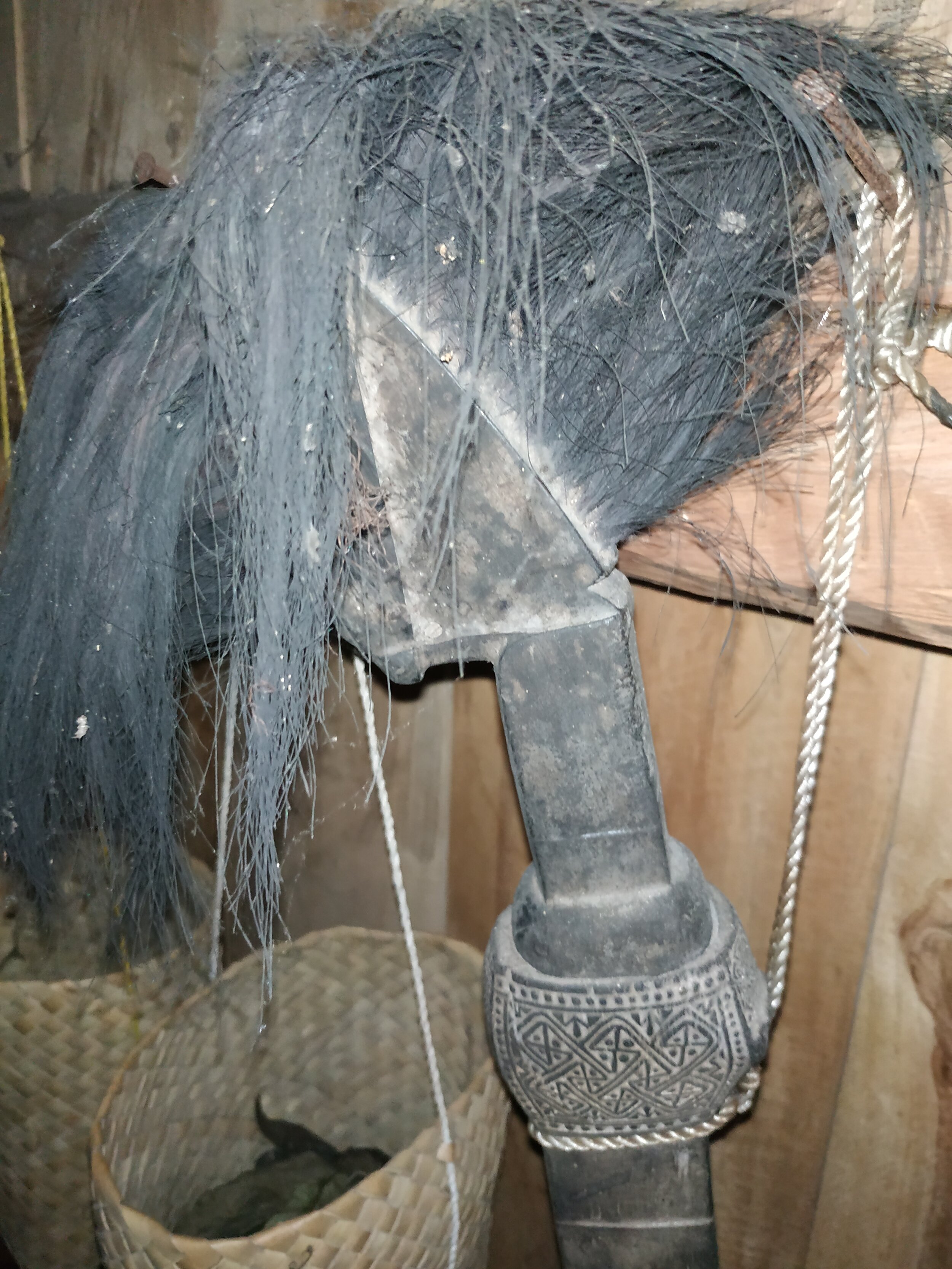
Old surik hanging beside the male pillar in a Tetun house. The inlaid scabbard and the goat fur, a sign of strength, are thick with dust and soot.
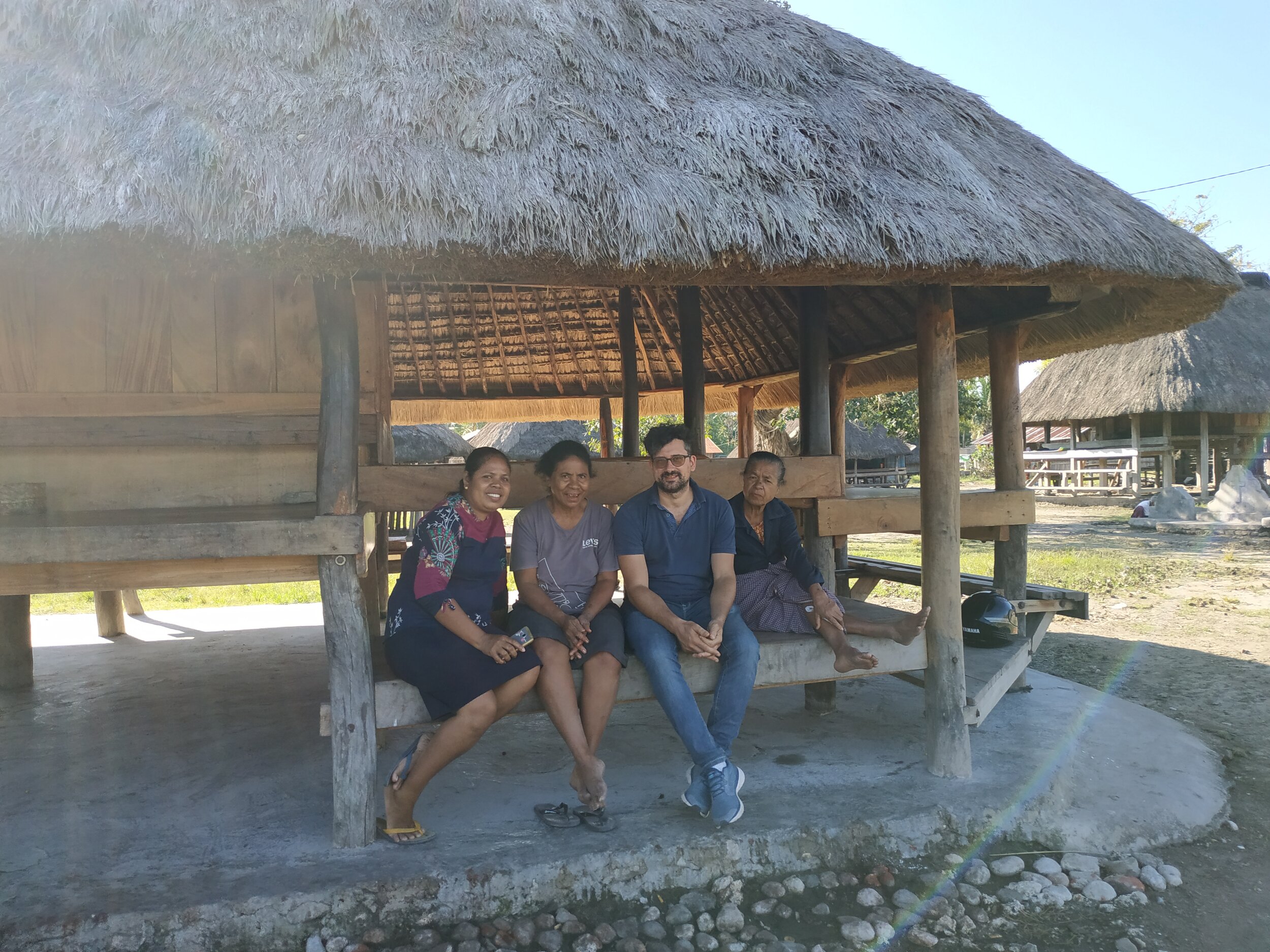
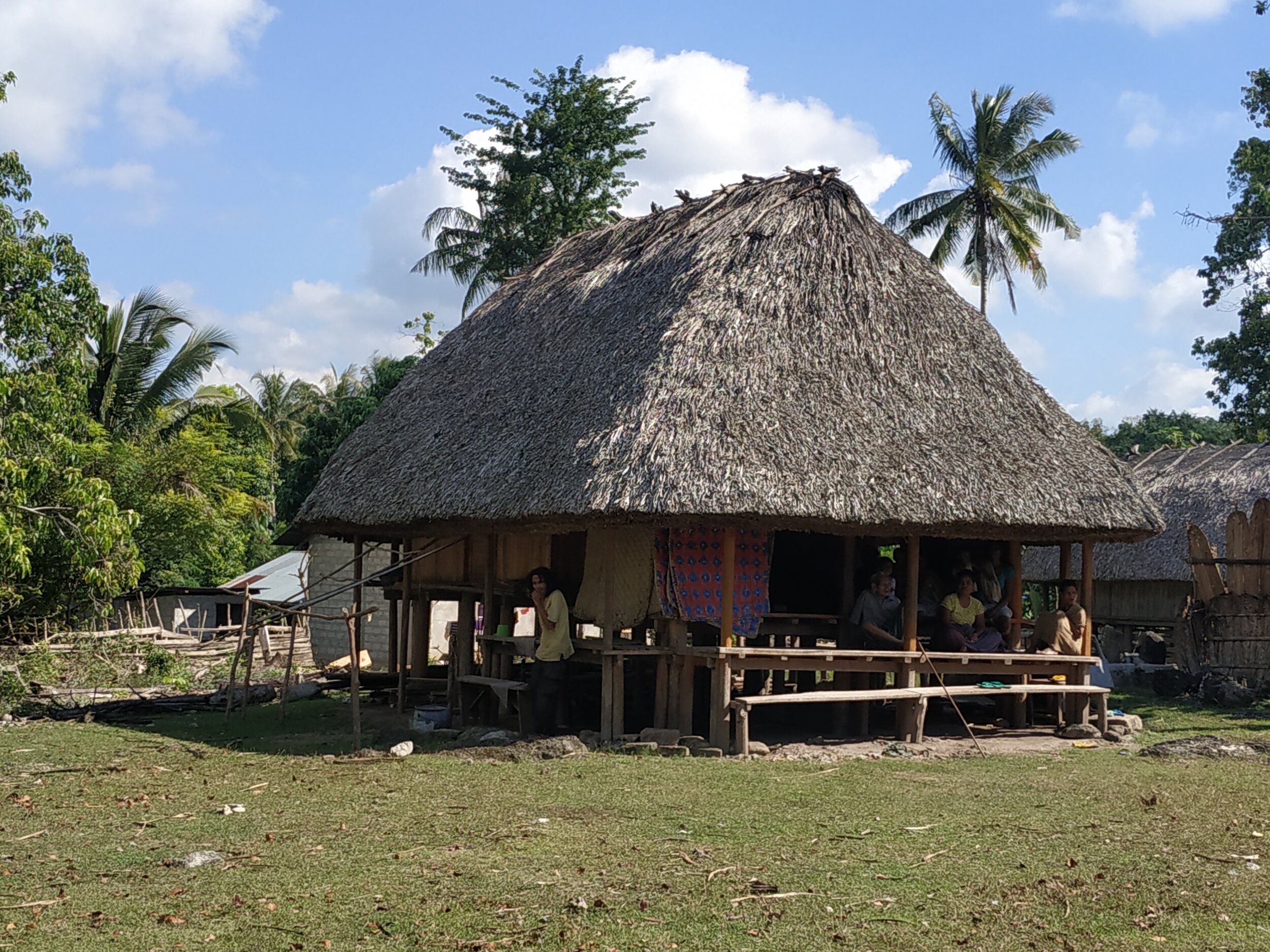
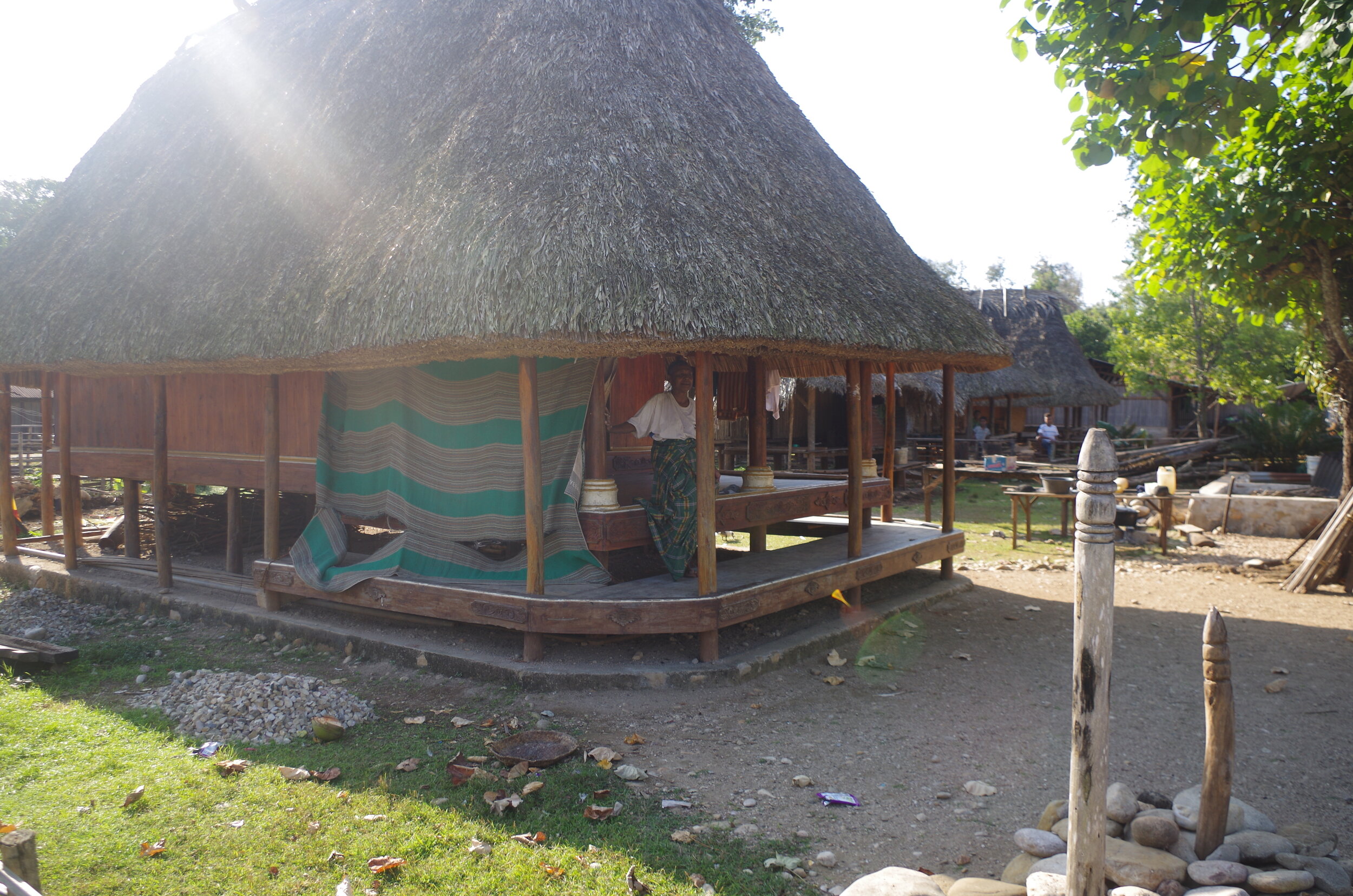
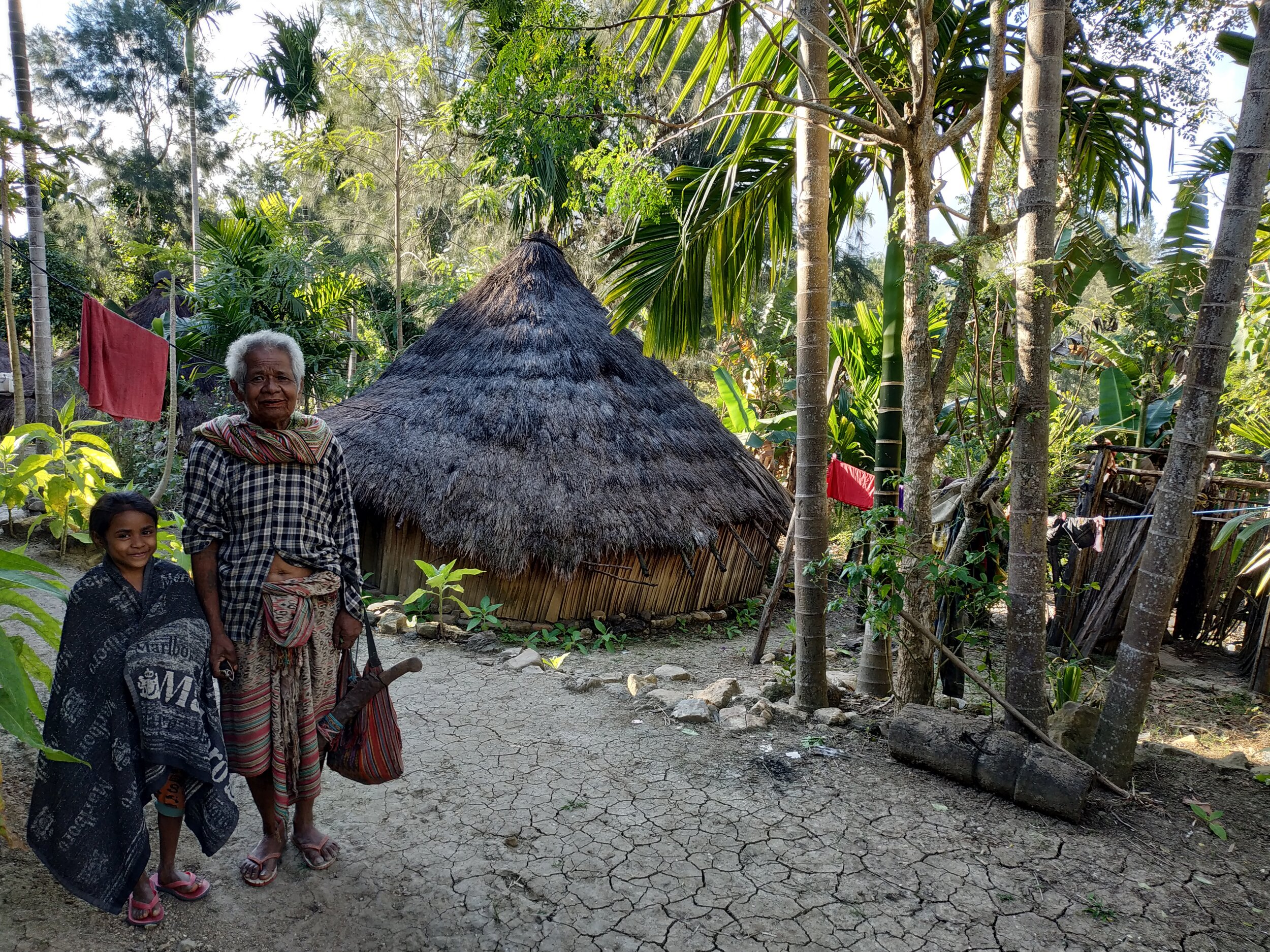
Tetun traditional house built on piles. The open veranda is the male space, the enclosed interior the female one.
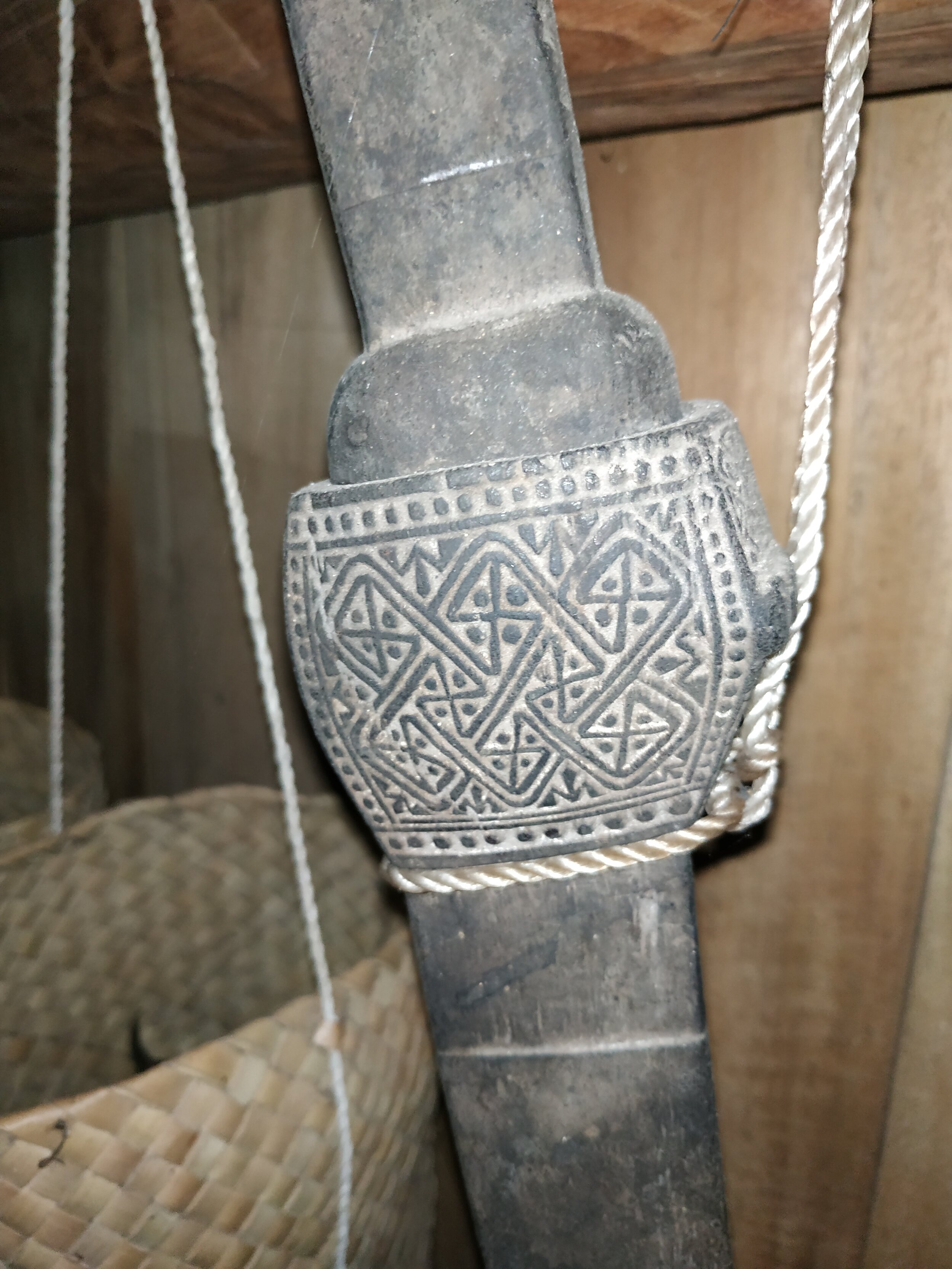
Detail of the scabbard of a Tetun surik, carved with geometric motifs.
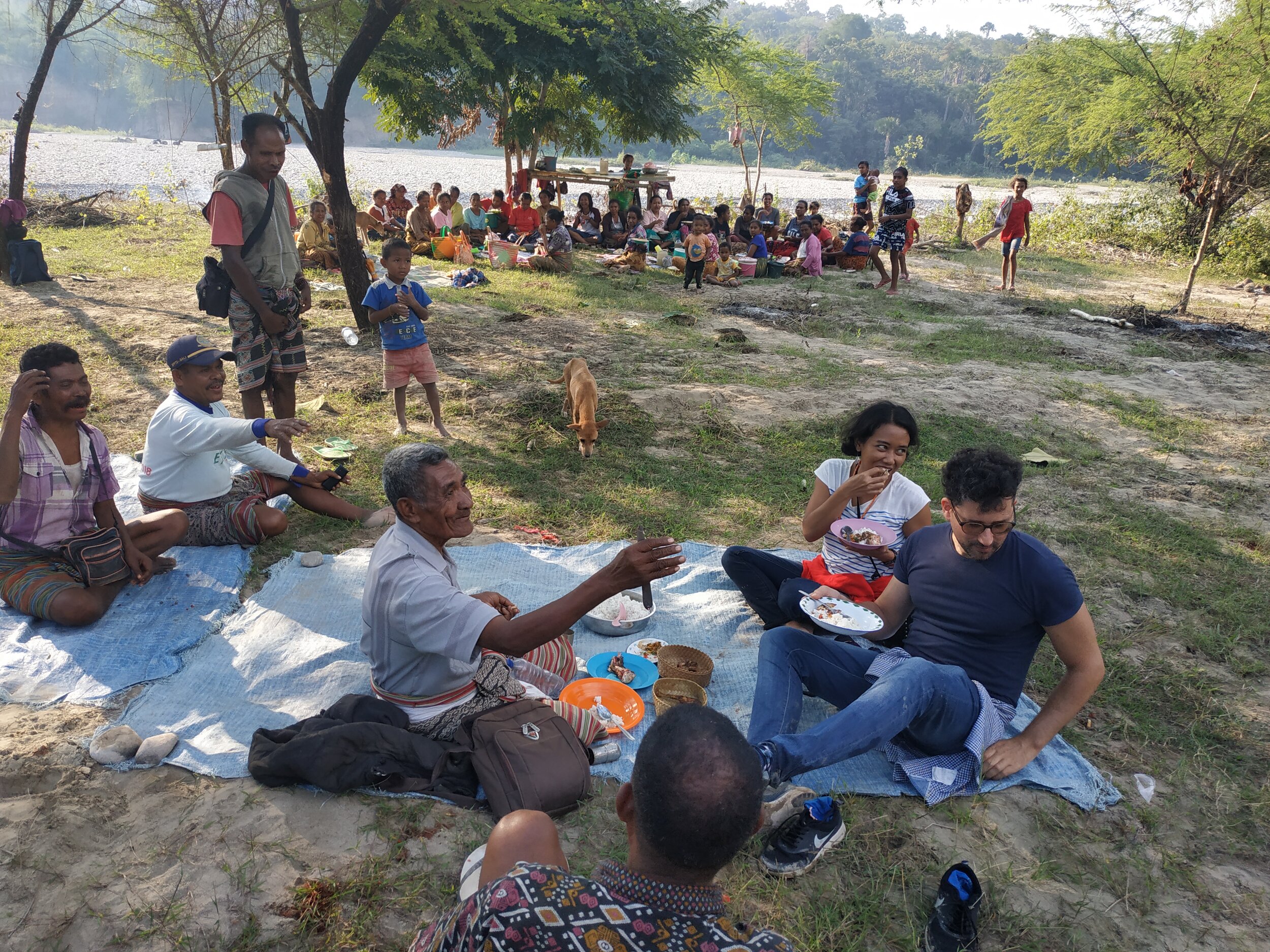
A feast was held by a community in a village in East Amanuban in Timor Island, Indonesia, after they had a ritual sacrifice for a new canal. The ritual was lead by a fukun, an elderly who was believed to have power to control water in the village. In the procession, they poured fresh chicken blood into the new canal, while praying that the canal would last at least until the dry season that year was over. The feast itself was part of the ritual where the whole community shared the chickens that were sacrificed during the ritual.
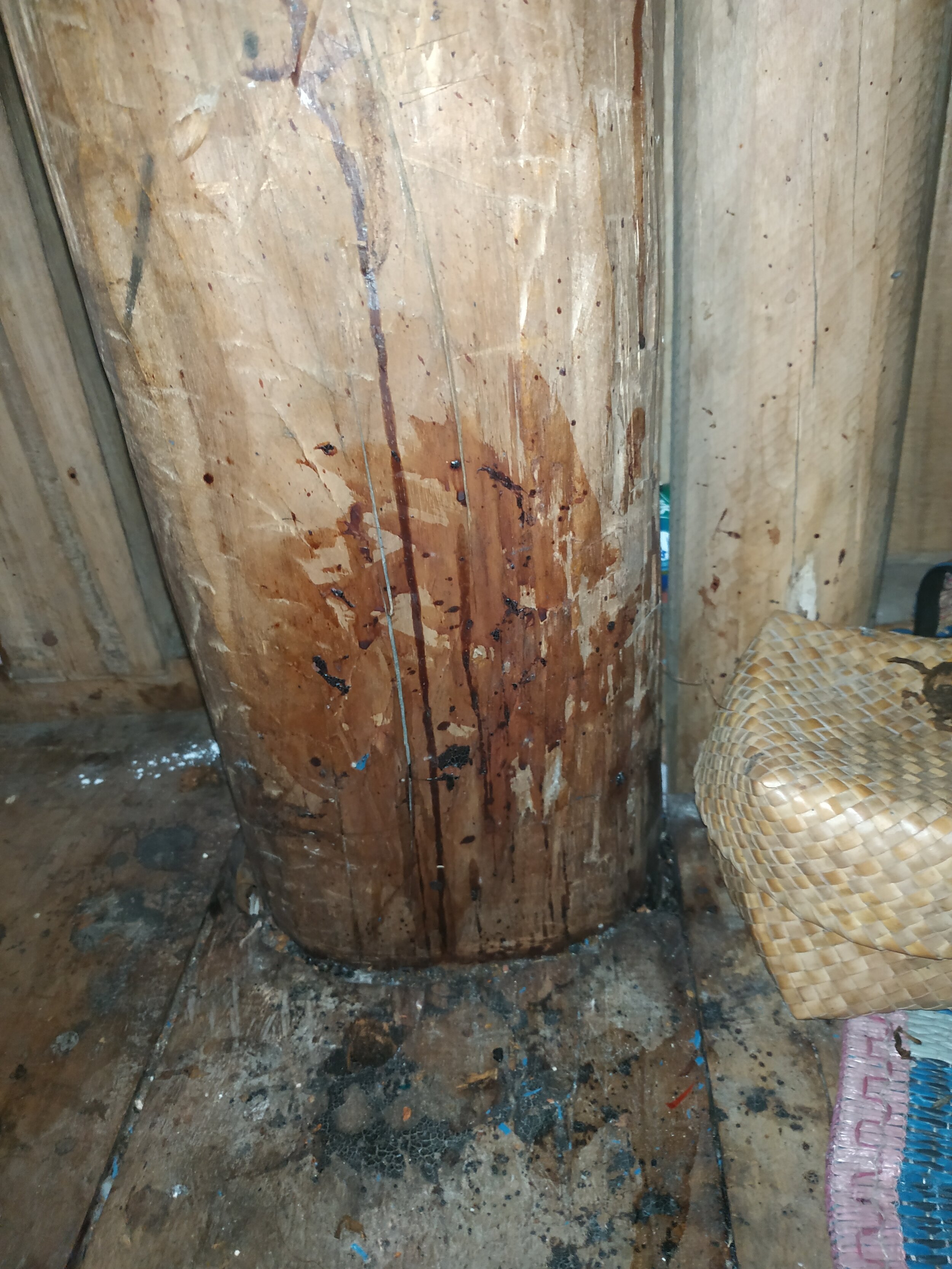
Blood from the last sacrifice at the base of the kakuluk mane, the male sacrificial pillar of a Tetun house.
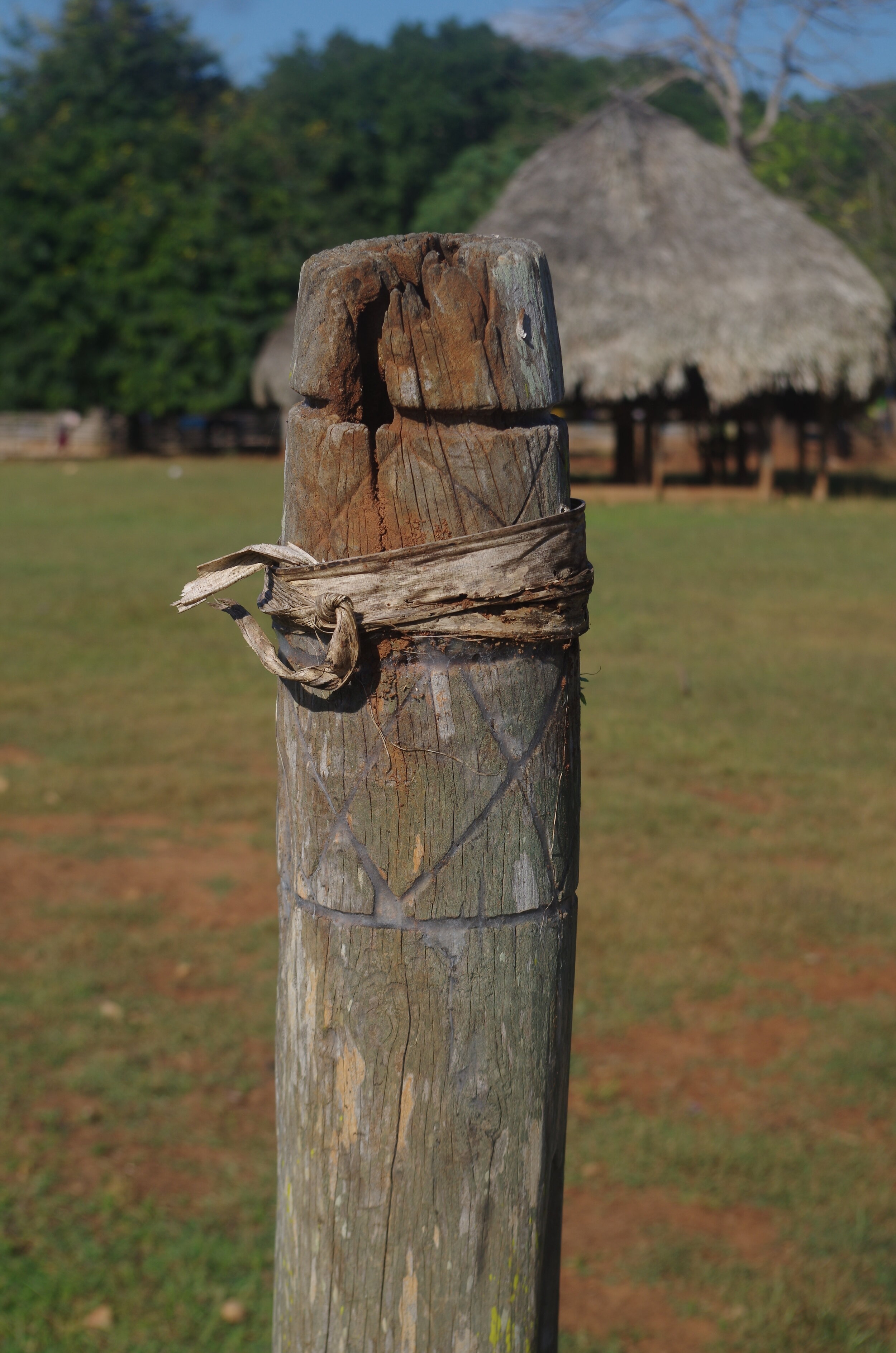
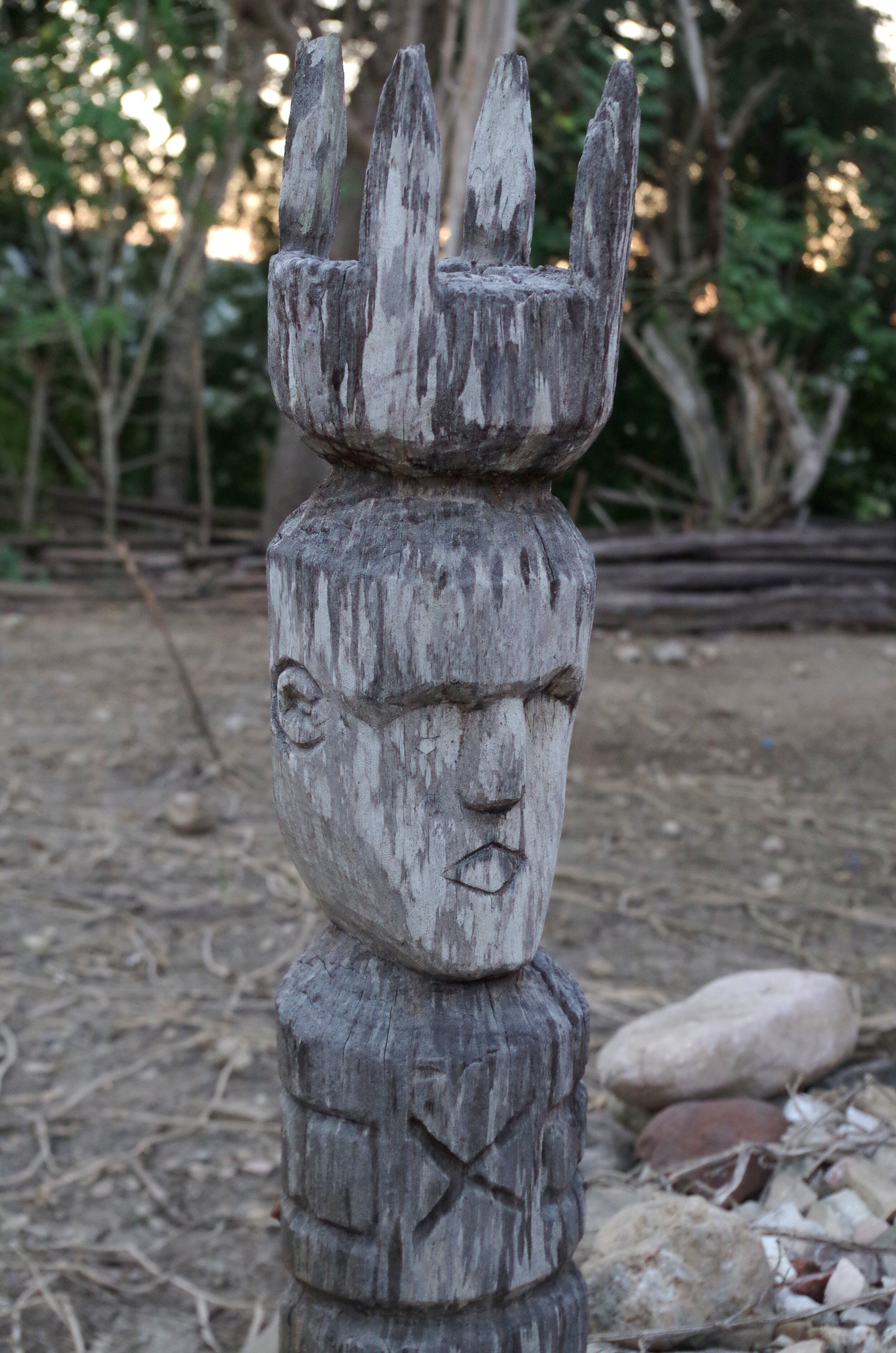
Top of an external ai toos with incised geometric motifs and a fibre binding. Tetun area, West Timor.
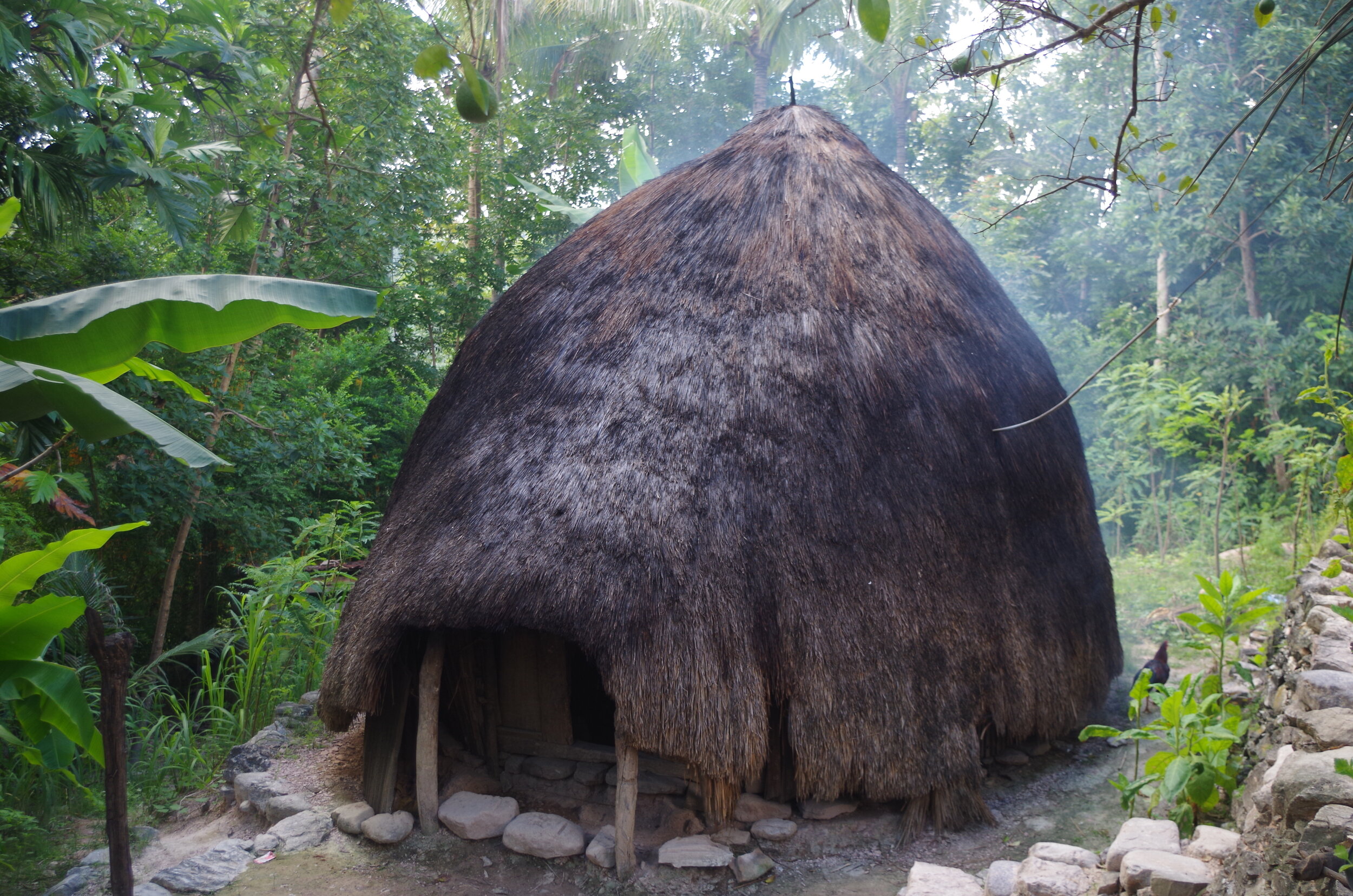
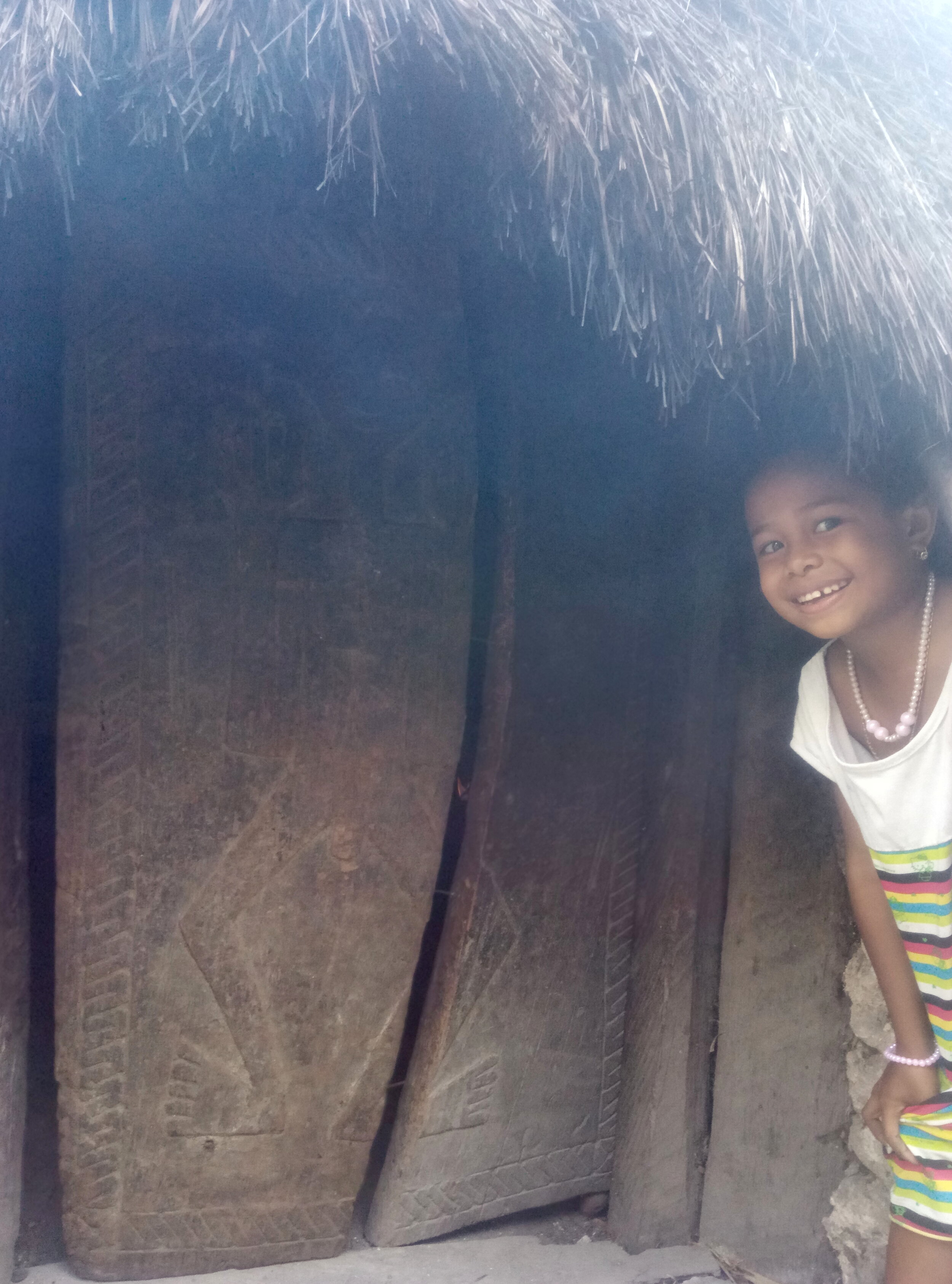
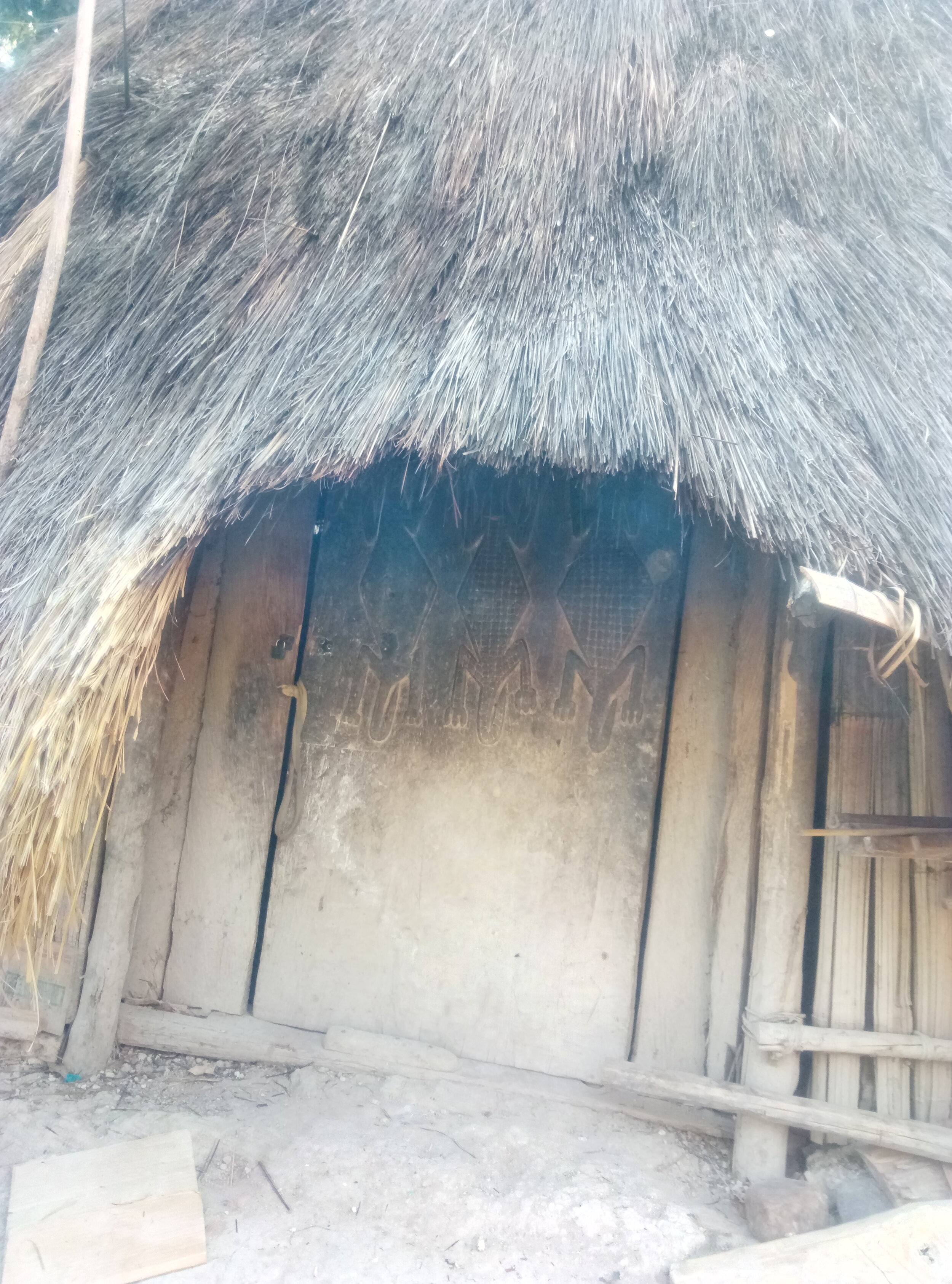
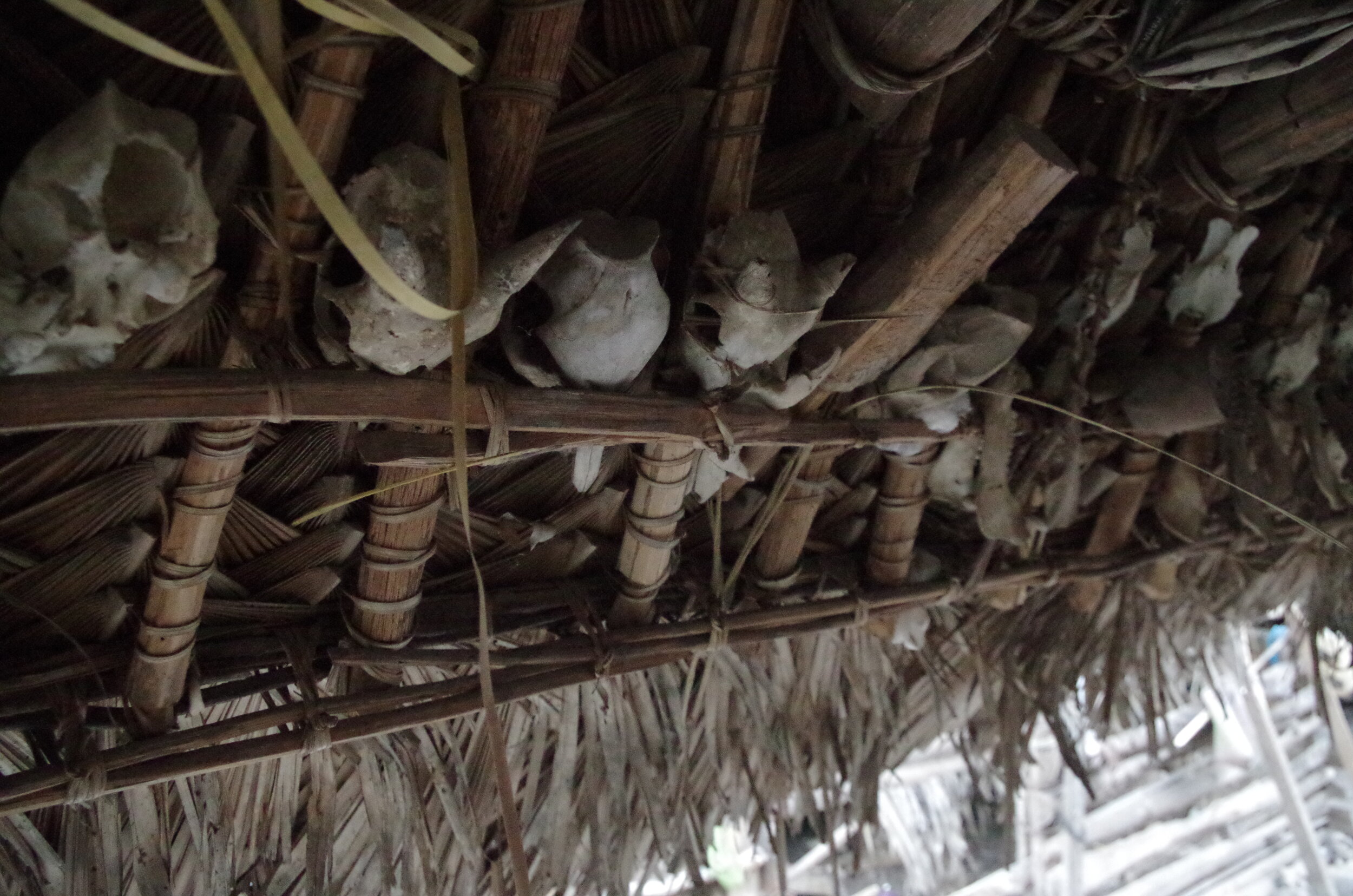
The Atoni ume kbubu, literally "round house", is kept full of smoke to protect the provisions stored in the loft and to keep the interior warm. The low door, around one metre, helps hold the smoke in.